
European Commission encourages everyday participation in democracy
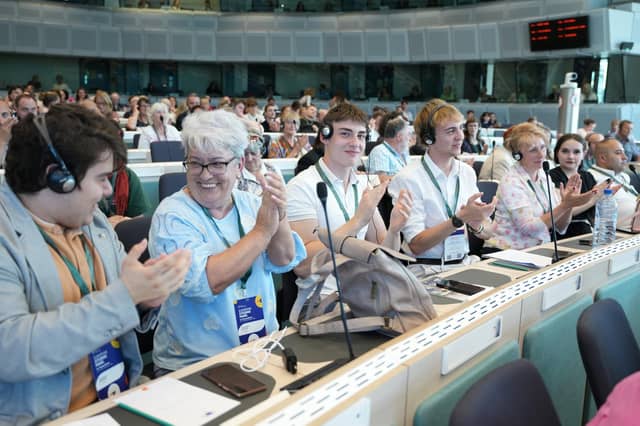

The European Commission has been encouraging its citizens to have its say on democratic resilience through a number of initiatives, including online forums and the European Citizens’ Panel to increase everyday particpation in democracy.
Democracy gives ordinary citizens a voice when it comes to choosing our political representatives and governments, and also a say on European matters.
Democracy is the cornerstone of the European Union and key to building peace, security, and shared prosperity. More than a system of governance, democracy is our way of life - safeguarding rights and freedoms and fostering open and just societies.
However, the European Commission stressed that democracy does not thrive on its own. It depends on active civic engagement, trustworthy information, independent media, free and fair elections, and resilient institutions. And in a rapidly changing world, democracy demands continuous adaptation and reinforcement.
Protecting democracy and building the democratic resilience of citizens, societies and institutions is an urgent and shared responsibility, according to the European Commission.
In light of this, the European Commission has opened up spaces for everyday participation in democracy through initiatives like the European Citizens' Panels, which bring together ordinary people from all 27 EU Member States, including Ireland, to discuss issues that matter to them.
The European Citizens' Panel gives citizens from across the EU an opportunity to contribute to this shared effort by helping shape future European action on democratic resilience.
Mikayala Moore from Mullaghmast in Co Kildare was recently chosen as the Irish ambassador and participant on the panel.
The current Citizens' Panel on Democratic Resilience is examining how democracies can be made stronger and more resilient. Its 150 participants - selected through a recruitment process designed to reflect the diversity of people living across the European Union - are using their own perspectives to identify challenges, exchange ideas and develop recommendations on the issue for the European Commission.
Democratic resilience is not simply a question for governments or EU institutions, according to the European Commission. It also concerns everyday experiences such as how people find and assess information, take part in public debate, feel heard by public bodies and have opportunities to shape decisions that affect their lives.
The Panel has been asked to consider questions including how people can recognise misleading content online, what helps them feel confident enough to speak and disagree, and how democratic participation can be made more accessible in local neighbourhoods and communities.
Other questions include how schools, workplaces and local organisations can help people develop the skills to engage in public debate, and what can be done to ensure that women, younger people and other groups that are often under-represented have a meaningful voice in decision-making.
The European Citizens’ Panel on Democratic Resilience takes place over three weekends between September and November 2026, when the final session will take place.
Mikayala feels her own participation was very worthwhile and she is now much more invested in European affairs and politics.
What surprised the Kildare woman about the experience was how everybody across Europe is grappling with similar issues.
“Being quite honest with you, what surprised me the most was the fact that we're all in the same boat. I spoke to many, many different nationalities when I was over there… Everybody seems to be struggling. Everybody seems to be kind of hitting hard times. And it's not progressing with the cost of living and trying to make ends meet, everybody is suffering from that,” Mikayla said.
On the reason why a debate is needed on democratic resilience, recent research findings by the European Commission were quite stark.
45% of European Union citizens disagree that elections in their country are free from any interference.
52% of European Union citizens claim to be personally exposed to disinformation or other forms of information manipulation at least once per week.
40% of European Union citizens are not satisfied with the state of media freedom, independence and pluralism in the EU.
Throughout her own participation, did Mikayla feel her own opinion was heard particularly on the discussion of media and fake news?
“A hundred percent. Because, you know, like my opinion would have been like, I was very interested in the whole aspect around why media shouldn't be believed wholly and truly as it's coming from a specific source”.
The experience of participating in the European Citizens’ Panel was one which Mikayla greatly enjoyed, getting to see the workings of politics first-hand in Brussels and also meeting people from different countries.
“Personally, I gained good experience, to be quite honest with you. And it has kind of made me look into getting into politics.
“Because at the end of the day, like, I have two small kids and if I was able to make any sort of a change for them, I would. And at the end of the day, it's not about us. It's not about the generation before us. It's about the generations after us,” she said.
Anyone can contribute to the online debate which is available on the official website of the European Union. This online debate invites you to share your views, experiences and ideas on how to strengthen democratic resilience across Europe.
Participants are invited to contribute their perspectives on key aspects of democratic life, such as access to reliable information, media literacy, awareness of citizens’ rights, participation in decision-making, and the skills needed to engage in democracy in a digital world.
The European Union (EU) encourages citizens from all 27 EU countries to discuss issues that matter to them. For example, what priorities should guide the EU’s long-term budget? How can we better prepare for future crises? How can we make our homes energy efficient? How can we strengthen our democracy? Citizens' ideas help shape future EU policies. Anyone can join open online debates - in any of the EU's 24 official languages.
You can join an online debate or share and vote on ideas; review and comment on other people's ideas.
To find out more see the official European Citizens' Panel on Democratic Resilience webpage at https://citizens.ec.europa.eu/resilience_en
Media literacy means being able to find, understand and critically assess information from news, social media, videos, podcasts and AI-generated content. It helps people spot misleading material and take part in public debate.
* If you want to have your say on the future of democracy in Europe, join the conversation on the European Citizens’ Engagement Platform, share your ideas, comment on proposals from others and help shape future European Citizens’ Panels. For more details click here.