Search


11 Apr 2026
Search
11 Apr 2026

Please allow ads as they help fund our trusted local news content.
Kindly add us to your ad blocker whitelist.
If you want further access to Ireland's best local journalism, consider contributing and/or subscribing to our free daily Newsletter .
Support our mission and join our community now.
To continue reading this article, you can subscribe for as little as €0.50 per week which will also give you access to all of our premium content and archived articles!
Alternatively, you can pay €0.50 per article, capped at €1 per day.
Thank you for supporting Ireland's best local journalism!

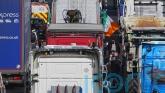
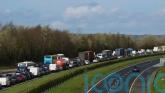
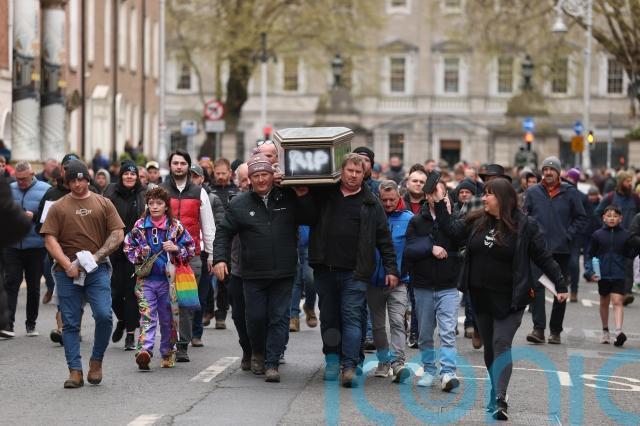
An Irish Government commitment for a “substantial” package of measures on fuel costs has not persuaded protesters blockading key parts of the country to desist, after a crunch meeting ended on Friday evening without measures finalised.
The talks between the Government and recognised national representative bodies are set to continue seeking a resolution on Saturday, but protesters who were locked out of Friday’s engagement said “absolutely nothing had changed” for them.
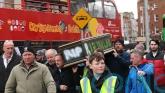
Christopher Duffy, a spokesman for the protest which has blocked Dublin city’s main thoroughfare since Tuesday, said he was “absolutely devastated” that nobody from that action or similar blockades elsewhere in the country had been invited.
Mr Duffy said it was “appalling” there had been no resolution to the meeting as thousands of farmers, truckers and other business people were concerned about going out of business.
The official bodies represented at the meeting included the Irish Road Haulage Association (IRHA), the Irish Farmers’ Association (IFA), and the Irish Creamery Milk Suppliers Association (ICMSA).
They met Energy Minister Darragh O’Brien, Agriculture Minister Martin Heydon, Minister of State Timmy Dooley and other Government officials.
However, protesters who had sought an engagement with the Government were turned away at the door.
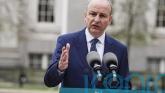
Tanaiste and Finance Minister Simon Harris said the talks were “going well” and committed to delivering a “substantial and significant” package of support.
Asked about what measures may be announced, he said he had to allow talks to conclude but commented: “In the past, we’ve looked at things like how we get direct funding schemes to our farmers, we’ve looked at things around credit supply lines, cash flow – and also, at a European level, both myself and the Taoiseach working to see if we can get any flexibility around the energy tax directive.”
Mr Harris described the holding position as an “act of good faith” as he appealed to protesters to “step back from the brink”.
Asked about specific requests from the protesters, he said excise reductions had already been implemented and any further move in that area would require a “degree of European agreement too”.
Mr Harris said a price cap would not work, would potentially cost billions and would transfer the price to the taxpayer.
Asked to put an overall euro amount on the package, he said it would be “substantial and significant”.
Spokesmen for the official bodies were also unable to put specifics on a potential outcome on Friday evening.
Speaking after the meeting concluded, IRHA president Ger Hyland said the exchanges were “angsty” but he remained “optimistic” for a resolution.
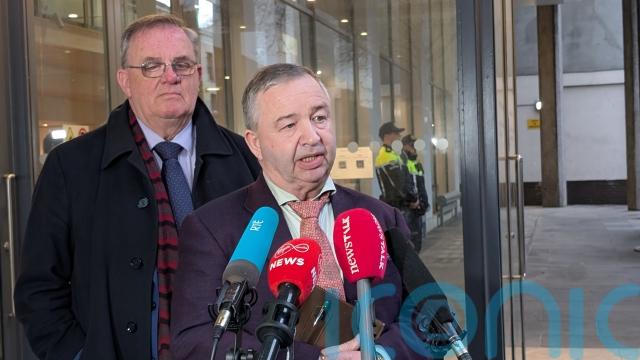
He said: “There’s certainly urgency that there has to be something done very fast.”
ICMSA president Denis Drennan said there was “huge frustration” on farms over rising and “unsustainable” production costs, adding: “Our members are haemorrhaging money at the moment.”
He said he “fully sympathised” with protesters but said essential supplies needed to get out through ports.
IFA president Francie Gorman said the Government needed to be “a lot more productive” on addressing “the national crisis”.
Mr Duffy, who had been listening to the above engagements with media, told reporters that protesters had politely sought a meeting but were denied.
He said: “We’re not criminals, we’re the Irish farmers and contractors and people in the transport industry.”
Mr Duffy added: “You’d think we were a bunch of criminals and hooligans the way they treated us – we were entitled to be in that room.”
Asked why protest spokesmen were not allowed entry into the meeting between the Government and recognised industry bodies, Mr Harris said: “The position of the Government has been crystal clear from day one.
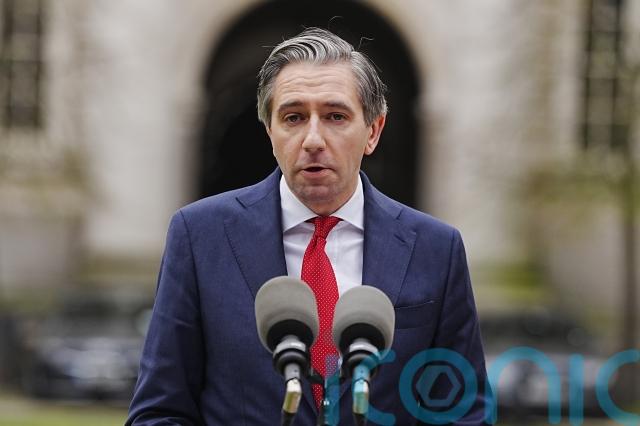
“We engage with the democratically elected representative bodies, and many of them are in the room today, and also we can’t have a situation where we’re engaging with people who are blockading key parts of our country.
“We’re trying to come up with economic solutions at the same time while blockades are causing significant economic damage to Ireland.”
Asked about the concerns raised over the impacts on fuel supplies and the provision of healthcare services, Mr Duffy said protesters had received reports of carers who could not afford to put fuel in their cars.
He said: “This is short-term pain for long-term gain.”
Mr Duffy contended protesters would have “come out with results” rather than representative organisations who were “coming out with nothing, only their own salaries”.
He said the protest would continue until there was a “serious reduction in our costs”.
Mr Duffy added: “We have nothing left to lose.”

Subscribe or register today to discover more from DonegalLive.ie
Buy the e-paper of the Donegal Democrat, Donegal People's Press, Donegal Post and Inish Times here for instant access to Donegal's premier news titles.
Keep up with the latest news from Donegal with our daily newsletter featuring the most important stories of the day delivered to your inbox every evening at 5pm.
Follow us on


This publication supports the work of the Press Council of Ireland and Office of the Press Ombudsman, and our staff operate within the Code of Practice of the Press Council. You can obtain a copy of the Code, or contact the Council, at www.presscouncil.ie, Lo-call 1800 208 080 or email: info@presscouncil.ie.