Search


31 Mar 2026
Search
31 Mar 2026

Please allow ads as they help fund our trusted local news content.
Kindly add us to your ad blocker whitelist.
If you want further access to Ireland's best local journalism, consider contributing and/or subscribing to our free daily Newsletter .
Support our mission and join our community now.
To continue reading this article, you can subscribe for as little as €0.50 per week which will also give you access to all of our premium content and archived articles!
Alternatively, you can pay €0.50 per article, capped at €1 per day.
Thank you for supporting Ireland's best local journalism!

Ireland is “no better prepared” for a pandemic than it was six years ago, a panel looking at the country’s response to Covid-19 has heard.
On Tuesday health experts took part in a discussion with Ireland’s Covid-19 Evaluation Panel, set up to examine the planning for and handling of the pandemic in Ireland.
It aims to identify lessons about the performance of the health and social care system and the Government’s response to risks, and will make recommendations to help prepare for future crises, but will not apportion blame.
Many experts praised aspects of Ireland’s response to the pandemic, but there was an acknowledgement that lessons had not been learned from some of the failures.
Panel chairwoman Professor Anne Scott concluded that “people were trying to do their best in quite difficult circumstances”, but added: “We can certainly learn from the lack of preparation, I think there is widespread agreement we were not prepared.
“We should not find ourselves in that situation in the future.”
Professor Anthony Staines, from Dublin City University’s School of Nursing, Psychotherapy and Community Health, said poor IT infrastructure caused issues and one reporting platform “had a weekly limit on how many cases you could put in”.
“This is not the kind of thing you want to discover in the middle of a pandemic, and it’s clearly insane.
“The IT systems in the Health Service Executive (HSE) are still disorganised, out of date and unbelievably slow to deliver.”
Prof Staines said the National Public Health Emergency Team (NPHET) is not a good model for managing a pandemic and is better suited to environmental disasters.
He said from early on “there was no one on it with serious epidemiological experience” and that by the end of the pandemic it had up to 50 members, adding “you can’t run a committee with 50 people”.
He said: “What happens when there’s another pandemic? Are we ready?
“And the answer is absolutely not, we are not ready.
“There is good evidence that pandemics are likely to become more frequent as a direct result of climate change.
“So if we are to cope with another pandemic, we need to do a great deal of work on the public health workforce, on information systems, on laboratory systems.”
Steve Thomas, a public health professor at Trinity College Dublin, warned that waiting lists and healthcare staff morale need to be tackled.
He said waiting lists have built up since the pandemic and if they are not tackled they will become “our starting point for the next big crisis”.
Prof Thomas said that during the pandemic, and the cost-of-living crisis that followed, the healthcare workforce was not as protected as they should have been.
He said this was a problem “across high-income countries” and “I think many, many countries and the WHO (World Health Organisation) have put their hands up over that”.
The panel also heard there were a number of “blind spots” in Ireland’s response to coronavirus, most significantly, how its spread in care homes was managed.
Mary Codd, an associate professor of epidemiology at University College Dublin, said: “Infection prevention control training in long-term residential care facilities was seriously missing or substandard.”
She said the mortality rate for over-70s who “cocooned” at home was no different to the general population, but mortality rates for people of the same age in residential facilities was 21 times higher.
Prof Codd said there are “lessons that have been learned we need to act upon” in residential care settings including “occupancy, staffing, remuneration, rotation, training, infection prevention and control”.
Speaking about the global response, former WHO deputy director general Dr Mike Ryan told the session that communities were not trusted enough to manage their own risks during the pandemic.
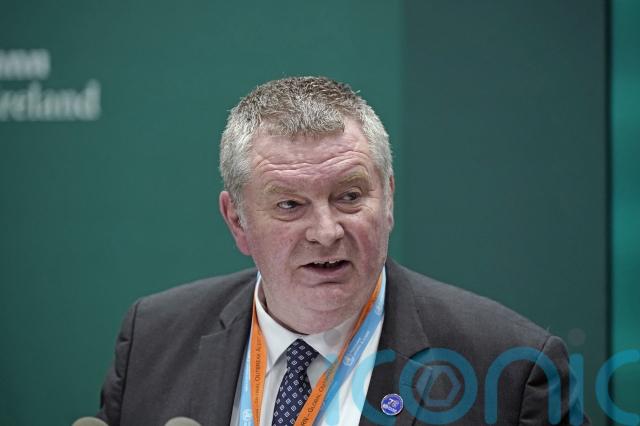
He said: “In general, people manage their own risk.
“They decide how many times a day they go to the shop, they decide if they get on public transport, they decide if they go to work, all of those are decisions that would increase or decrease your risk of exposure, and we didn’t trust communities enough at times to make those decisions.”
He said he could “understand why” that approach was taken as “health systems were coming under huge pressure”, but added “there’s no democracy in that”.
He added: “At no point did the World Health Organisation ever advise lockdowns.”
Dr Ryan also said: “It is very important that we don’t play the next pandemic like the last one.”
He said while scientific communities are “good” at dealing with rapidly changing advice based on new research, societies “take time to catch up” and communication about changing advice managed to “turn a trust pothole into a trust chasm”.
He said the pandemic “didn’t cause the lack of trust in the system”, but “we really hit the ball out of the park when it comes to that and that’s something public health authorities nationally and internationally need to examine”.
“How do we communicate with the public, and how do we communicate uncertainty?”
He said communities need to be “empowered” and “trusted”, adding that he fears pandemic preparedness in the future could be too technologically focused.
“Unless we start to invest in community and participatory public health and have communities ready for the next pandemic, we’re going to fail, not because of the technological and the innovation solutions, but we have not prepared, supported and involved our communities in preparing for the next pandemic.”
He said it was interesting for him to “come home” and look at the “realities that existed in the system”.
The perception abroad of Ireland was that there was “a very trusting community” where everyone worked hard and “tried to do their best”, he said, and added it is important to recognise “people in the health system did a great job in the circumstances everyone faced”.
The panel also heard that the initial global reaction to the pandemic was characterised by “confusion and blame”.
Professor David Heymann, professor of infectious disease epidemiology, said: “With these two words, the world was facing a new epidemic, which turned into a pandemic.”

Subscribe or register today to discover more from DonegalLive.ie
Buy the e-paper of the Donegal Democrat, Donegal People's Press, Donegal Post and Inish Times here for instant access to Donegal's premier news titles.
Keep up with the latest news from Donegal with our daily newsletter featuring the most important stories of the day delivered to your inbox every evening at 5pm.
Follow us on


This publication supports the work of the Press Council of Ireland and Office of the Press Ombudsman, and our staff operate within the Code of Practice of the Press Council. You can obtain a copy of the Code, or contact the Council, at www.presscouncil.ie, Lo-call 1800 208 080 or email: info@presscouncil.ie.