Search


19 Feb 2026
Search
19 Feb 2026

Please allow ads as they help fund our trusted local news content.
Kindly add us to your ad blocker whitelist.
If you want further access to Ireland's best local journalism, consider contributing and/or subscribing to our free daily Newsletter .
Support our mission and join our community now.
To continue reading this article, you can subscribe for as little as €0.50 per week which will also give you access to all of our premium content and archived articles!
Alternatively, you can pay €0.50 per article, capped at €1 per day.
Thank you for supporting Ireland's best local journalism!

The Government has “no intention” of cutting regulation to allow anyone with a car to provide taxi services, the Transport Minister has said.
The National Transport Authority (NTA), which regulates taxi services, is due to conduct an assessment of dispatch operator licensing in Ireland.
Ireland’s consumer watchdog has argued that opening the taxi market to new entrants would address a supply shortage.
The Competition and Consumer Protection Commission (CCPC) said removing regulatory barriers for ride-hailing apps such as Uber and Bolt would respond to consumer needs and align with other countries.
The Commission’s chairman Brian McHugh said its recommendation to open up the market was not about “abandoning oversight or regulation”.
He said any new entrants should be regulated to maintain high service and safety standards.
He said the CCPC strongly supports safeguards and requirements around new drivers, such as garda vetting, but said there should be an openness to discussing requirements on vehicle standards.
However, Mr McHugh said the “blunt instrument” of requiring new entrants to the taxi market to have wheelchair-accessible vehicles was affecting barrier to entry and limiting supply for all customers, including those who used wheelchairs.
This could also serve as a barrier to someone wanting to drive on a part-time basis, for example at weekends between another job.
Mr McHugh said Ireland could not have a functioning taxi market without new entrants.
In a statement on Thursday, Transport Minister Darragh O’Brien said the model where anyone with an an app and a private car which is not licensed as a Small Public Service Vehicle (SPSV) can provide taxi services “does not exist in Ireland”.
He added: “It is not government policy and there is no intention to introduce it.”
Mr O’Brien said he encouraged all stakeholders to engage with the NTA review.
Uber welcomed the CCPC report and said it is clear that the Minister for Transport and the NTA “need to begin a serious reform process” that improves access and availability for consumers and drivers.
“We support the Taxis for Ireland Coalition call for a National Taxi Strategy that strengthens the market while supporting a well regulated industry.”
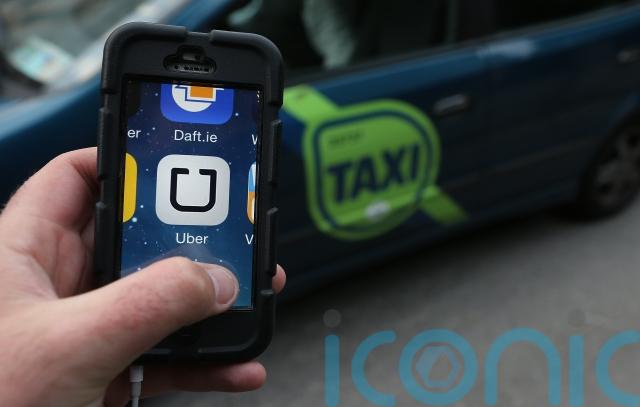
Freenow by Lyft warned that “full deregulation is a race to the bottom” that would lead to a decline in service quality.
General manager Danny O’Gorman said: “Whilst we acknowledge the rural supply challenges the CCPC have raised, there is little evidence that simply increasing overall driver numbers would solve the problem.
“Most taxi drivers work in urban centres where demand is concentrated, a sharp increase in new licences would likely skew the balance further towards cities, leaving rural areas no better served.
“A sudden influx of new entrants would undermine the ability of existing Small Public Service Vehicle-licensed professionals to earn a stable income.
“Our research shows that proposals to deregulate the sector could see drivers lose nearly 400 euro a month in earnings.
“53% of our driver partners would consider leaving the sector entirely if unlicensed drivers were allowed, while 66% expressed deep concern for their long-term financial stability.”
The CCPC has not recommended full deregulation.
The commission’s study found that 60% of participants also supported fixed-fare offerings.
Dublin taxi drivers staged a series of rush-hour protests in the capital over fixed-fare systems.

Subscribe or register today to discover more from DonegalLive.ie
Buy the e-paper of the Donegal Democrat, Donegal People's Press, Donegal Post and Inish Times here for instant access to Donegal's premier news titles.
Keep up with the latest news from Donegal with our daily newsletter featuring the most important stories of the day delivered to your inbox every evening at 5pm.
Follow us on


This publication supports the work of the Press Council of Ireland and Office of the Press Ombudsman, and our staff operate within the Code of Practice of the Press Council. You can obtain a copy of the Code, or contact the Council, at www.presscouncil.ie, Lo-call 1800 208 080 or email: info@presscouncil.ie.