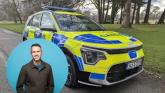
File photo of electric Garda car || inset: Kieran Cuddihy
Search


30 Jan 2026

Please allow ads as they help fund our trusted local news content.
Kindly add us to your ad blocker whitelist.
If you want further access to Ireland's best local journalism, consider contributing and/or subscribing to our free daily Newsletter .
Support our mission and join our community now.
To continue reading this article, you can subscribe for as little as €0.50 per week which will also give you access to all of our premium content and archived articles!
Alternatively, you can pay €0.50 per article, capped at €1 per day.
Thank you for supporting Ireland's best local journalism!

A jury has begun deliberations in relation to the death of George Nkencho, after three weeks of evidence.
Coroner Dr Myra Cullinane told the jury there were two verdicts available to them, death by misadventure and the narrative verdict.
She said the inquest was not a trial, but was a fact-finding exercise where they would be the arbiters of fact and she would guide them on the law.
She said that it was “impermissible” at the coroner’s court to decide whether a person is liable, either criminally or civilly, for another person’s death.
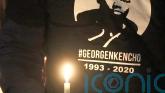
Mr Nkencho, 27, the eldest of five siblings, died after being shot by gardai outside his west Dublin home in December 2020.
The incident was the subject of an independent criminal investigation by a Garda oversight body, which concluded in June 2023 with the submission of an investigative file to the director of public prosecutions.
A decision was made not to pursue any criminal prosecution in relation to the shooting.
An inquest into his death has been running at Dublin District Coroner’s Court over the last three weeks.
The inquest has heard from shop workers and customers who described seeing Mr Nkencho punch an assistant manager at a Eurospar in Hartstown, and members of the public in the shop that day.
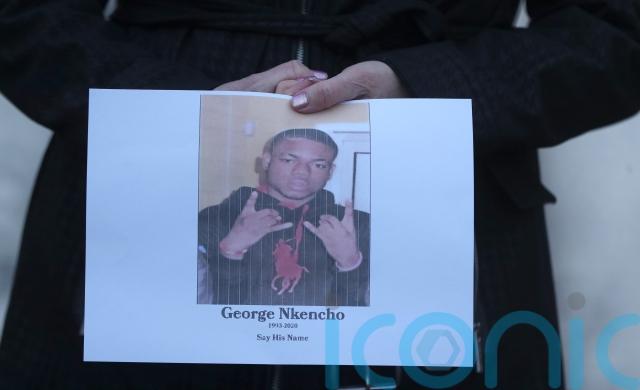
The jury also heard evidence from Mr Nkencho’s mother, Blessing, and his brothers and sisters, some of whom were in the family home when the scene unfolded outside.
They also heard from members of the public who witnessed the incident outside the Nkencho home and were shown a mobile phone video taken by a passer-by as well as transcripts from emergency calls.
Gardai told the inquest of their interactions with Mr Nkencho as he walked home, and told the inquest how he had waved a knife towards them and that they feared for their lives.
The Garda who shot Mr Nkencho, referred to as Garda A at the inquest, said they believed they would be killed if they did not use lethal force.
A state pathologist told the inquest Mr Nkencho had been shot six times – identifying one of the wounds as “definitely” fatal as it pierced the heart and lung, but said others were also “quite significant”.
On Friday, Dr Cullinane told the jury death by misadventure is defined as an unintended outcome of an intended and lawful action, while a narrative verdict was a “neutral” account of the “multi-factorial” circumstances of the event.
She said of the death by misadventure verdict option: “In consideration of the circumstances you’ve heard in evidence, you may find that it was the intended action of An Garda Siochana, specifically Garda A and B, to disarm George Nkencho, who was wielding a knife – a risk factor – and considered to be a danger to others which action escalated from the failed use of taser, to the failed use of pepper spray, to the ultimate use of a firearm, with the unintended outcome of the death of George Nkencho from gunshot injuries.”
She said that it was possible that the “one-phrase verdict” would be “insufficient” to do justice to the evidence.
She said a narrative verdict could arise if the jury decides the evidence is “complex and multi-factorial, with many issues arising together with those together being significant contributors to the cause of death”.
“The narrative verdict provides for a neutral account of the details of the circumstances surrounding the death, and a jury may, in that way, record a more expansive account than is provided for by way of the short form verdict.”
She said that the law does not allow for a verdict of unlawful killing in this inquest, which is only permitted in “very restricted circumstances”, where there is a view that the law had been broken “in a serious fashion”.
She said the director of public prosecutions had decided that no criminal proceedings would be brought in relation to Mr Nkencho’s death, and as there was no new evidence heard at the inquest, “it’s not open to you members of jury to come to a different conclusion, by bringing in a verdict containing implied criminal liability of a potentially identifiable person.”
She urged them that they were under “no time pressure” before the jury rose to deliberate at 11.20am.

Subscribe or register today to discover more from DonegalLive.ie
Buy the e-paper of the Donegal Democrat, Donegal People's Press, Donegal Post and Inish Times here for instant access to Donegal's premier news titles.
Keep up with the latest news from Donegal with our daily newsletter featuring the most important stories of the day delivered to your inbox every evening at 5pm.
Follow us on


This publication supports the work of the Press Council of Ireland and Office of the Press Ombudsman, and our staff operate within the Code of Practice of the Press Council. You can obtain a copy of the Code, or contact the Council, at www.presscouncil.ie, Lo-call 1800 208 080 or email: info@presscouncil.ie.