
New public sector strike ‘extremely regrettable’, Minister says

Public sector unions are preparing for a 24-hour national strike on the same day as a major EU presidency event.
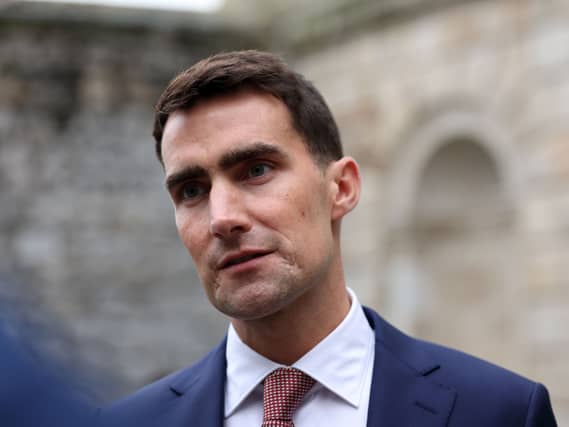
The escalation of industrial action by public sector unions is “extremely regrettable”, Minister Jack Chambers has said.
Public sector unions are preparing the 24-hour national strike on the same day as a major EU presidency event.
It comes after weeks-long talks with the Department of Public Expenditure at the Workplace Relations Commission failed to reach an agreement on the pay dispute on Friday night.
The proposed stoppage coincides with the European Political Community meeting on November 12, a major event in Ireland’s presidency of the Council of the European Union which will feature dozens of heads of state visiting Dublin.
Rank-and-file gardaí are also planning a work-to-rule around the event.
The public services committee (PSC) of the Irish Congress of Trade Unions said on Monday the Government had “yet to make a credible offer to resolve the current dispute”.
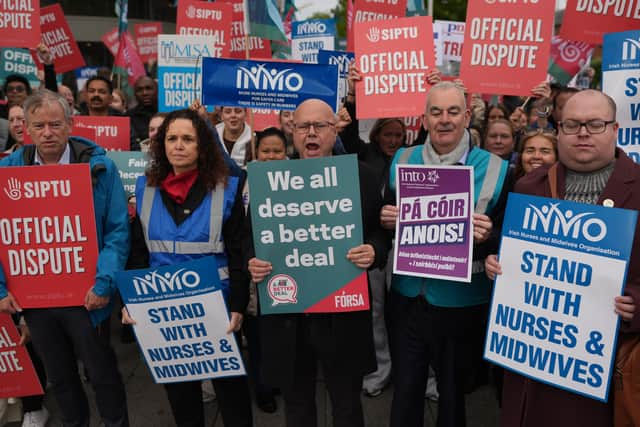
In a statement, it said: “Preparations are now underway for a 24-hour work stoppage on Thursday November 12.
“A rally in Dublin, alongside regional rallies, will mark the strike action and bring members together in support of a resolution.”
PSC chairman Kevin Callinan said they will also be looking at “intensification of our work-to-rule action and other industrial action in the period immediately after the 12th”.
On Saturday, the Workplace Relations Commission (WRC) indicated that after 10 days of intensive talks, it is of the view that certain matters have reached an impasse.
It requested that a Government appointed group formed to assist with the talks should consider relevant matters and “put forward a means of resolution”.
Both parties to the talks are to meet the group on Tuesday.
Public Expenditure Minister Jack Chambers said the November 12 strike will cause “significant disruption to critical services that the public rely on”.
In a statement, Mr Chambers said his officials will engage with the Government-appointed group with a view to resolving matters “without undue delay”.
He said: “All matters under discussion remain under a Workplace Relations Commission-led process currently, and discussions can and should recommence under the auspices of the WRC following engagement with the Government appointed group.”
He added: “Government remains committed to our system of collective bargaining in the public service.
“We see the value in maintaining a system that has successfully delivered fair and balanced outcomes for public servants and taxpayers alike, while supporting sustained improvements in public service pay.
“Government wants an agreement that gets the balance right by delivering a pay deal that is fair and credible to workers and is fiscally responsible and sustainable for the country.”
Hundreds of thousands of public sector workers participated in a nationwide strike in October.
A planned repeat was suspended to facilitate talks with the Department of Public Expenditure but is now back on the table.
Mr Callinan, who previously described the WRC talks which began on Monday October 19 as occasionally “heated”, said unions did not feel the Government had addressed concerns around the gap between wages and prices.
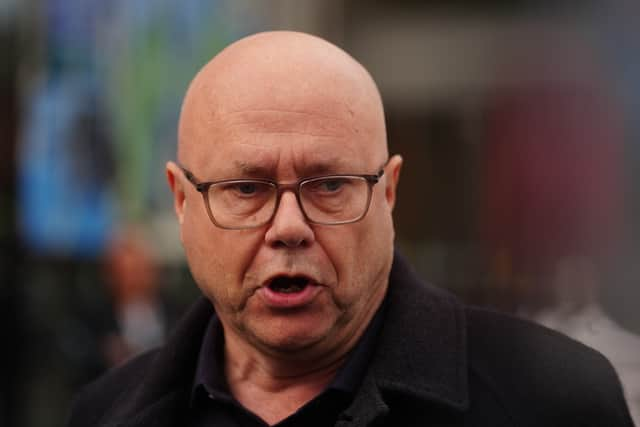
The Fórsa general secretary said “there was a lot of anger in the room” when affiliated unions received the latest update on the talks, adding it “quickly turned to quiet determination”.
Asked if the EU presidency event was intentionally targeted, Mr Callinan said: “No, this was more driven by logistical considerations and the fact that previously we had a strike on a Wednesday and it was felt that we should vary it for various reasons.”
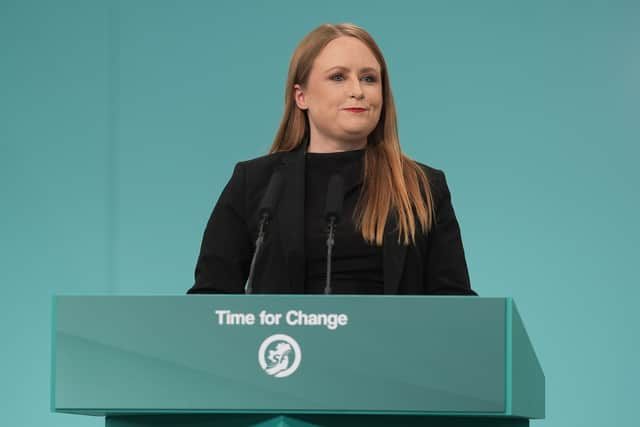
Sinn Féin public expenditure spokeswoman Mairéad Farrell said the lack of a pay deal was an “abject failure of leadership”.
She said: “The collapse of these talks will come as a profound disappointment for the nurses, teachers, SNAs and other public sector workers who desperately need the Government to listen to their concerns and deliver a fair pay deal.
“Our public sector workers do not want to be on strike, but they have been left with no other choice.”
The last strike forced the closure of schools, the rescheduling of thousands of non-emergency hospital appointments and the cancellation of driving tests and most court hearings.
The public sector workers, including nurses, doctors, teachers and civil servants, launched the national strike after first engaging in work-to-rule action.
Unions had demanded that pay would be top of the agenda in the talks, with the Government saying it would be discussed as a priority.
Meanwhile, the Garda Representative Association (GRA) is also planning a work-to-rule action which will run between Tuesday November 10 and Saturday November 14.
This period includes the European Political Community meeting on November 12, as well as the informal meeting of the EU heads of state or government on November 13.