03 Apr 2026
03 Apr 2026

Please allow ads as they help fund our trusted local news content.
Kindly add us to your ad blocker whitelist.
If you want further access to Ireland's best local journalism, consider contributing and/or subscribing to our free daily Newsletter .
Support our mission and join our community now.
To continue reading this article, you can subscribe for as little as €0.50 per week which will also give you access to all of our premium content and archived articles!
Alternatively, you can pay €0.50 per article, capped at €1 per day.
Thank you for supporting Ireland's best local journalism!

The service operates under recognised international standards, supported by Pulp’s AAA NAID and ISO9001 certifications

Irish companies have been talking a great deal about rising expenses, yet one area that often escapes attention is the steady build-up of paper, files and unused items inside offices. Time is lost in small moments throughout the week as staff work around clutter that has quietly accumulated.
When businesses review where their working hours actually go, many are surprised by how much effort is spent managing material that no longer serves a purpose.
The Small Delays That Interrupt the Day
Walk through any workplace and it is easy to spot corners where things have been left for another time. A pile of reports that no one feels ready to revisit. A box of outdated equipment under a desk. Someone goes looking for a document and ends up hunting longer than planned. None of these issues look serious on their own, yet they interrupt the day more often than people realise.
Why Businesses Are Re-examining Their Paper Trails
Hybrid working has changed how offices deal with documents. Some files stay online, others end up on paper, and plenty are carried between home and the office as people split their time.
GDPR brings its own pressure, as organisations must think carefully about where they keep anything with personal details and the possibility of fines if that material is handled carelessly. When routines slip, papers are left in different spots by different people, and the build-up grows slowly until someone finally notices the amount that has gathered.
As a result, many companies now bring in external shredding services, with firms like Pulp becoming part of their regular office management. Paper has a way of gathering quickly, even in organisations that feel their processes are under control. Reports, drafts and meeting notes are often left behind, and the backlog grows without much notice.
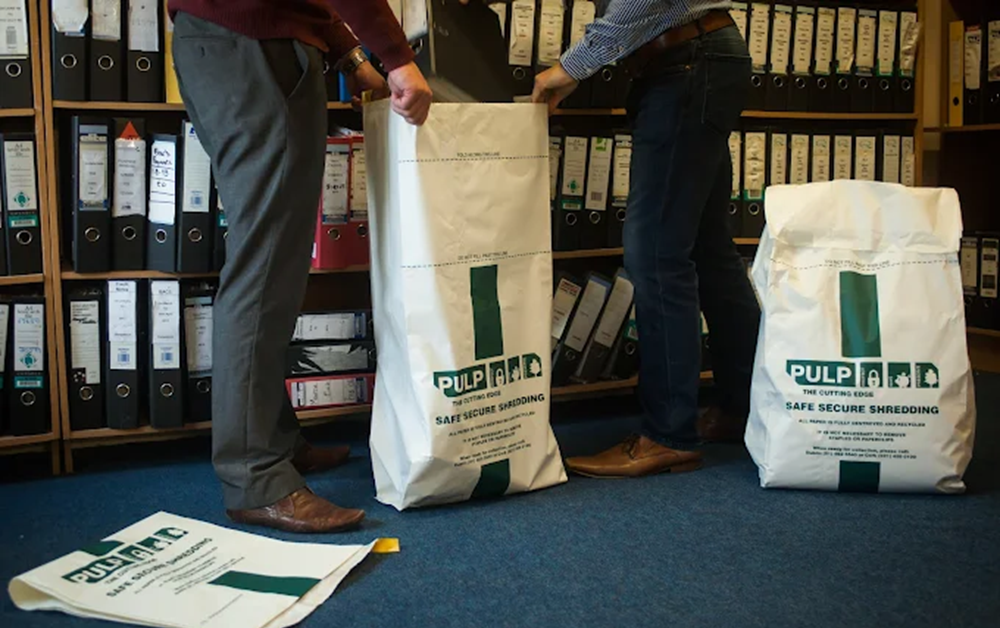
Pulp manages the full process when they arrive on-site. They supply consoles so staff have somewhere secure to place paper between visits, and their garda-vetted team collect the units on a schedule that suits the business. The material is taken directly to their mobile shredding truck outside, where it is destroyed using cross-cut equipment.
The service operates under recognised international standards, supported by Pulp’s AAA NAID and ISO9001 certifications. Companies also receive a certificate of destruction, and the shredded material is sent for recycling.
Regular visits prevent paper from building up again. Staff are not diverted from their own work to manage any of it, and once the material leaves the premises, people know it is being handled securely rather than left waiting for attention.
Forgotten Devices Create Their Own Problems
Most workplaces have a spot where old tech slowly collects. Items are set aside during busy periods and then forgotten. Old devices often sit untouched because people are unsure what is stored on them or who should deal with them. Bringing in a certified IT destruction service clears them out safely and removes any uncertainty about what they might contain.
Space Costs More Than People Expect
Boxes of files and unused equipment also carry a financial cost. Some businesses pay for storage space simply because they have not reviewed older material for years.
Once companies sort through what they are holding and remove items that no longer have a purpose, they often free up room and reduce costs they did not anticipate. Some shift to smaller storage areas, while others use the space more effectively for day-to-day work.
Better Organisation, Better Workdays
When surplus material is cleared, everyday work tends to move more smoothly. Staff locate documents more easily, and managers feel better prepared for audits or client reviews because records are clearer and more accessible.
Across different sectors, companies are starting to fold these habits into their usual office routines, clearing older material when they can instead of leaving it for another time. It is a small shift, yet staff often notice the difference. With fewer piles gathering in corners and less guessing about what is where, the working day tends to run with fewer stops and starts.
*Sponsored Content

Subscribe or register today to discover more from DonegalLive.ie
Buy the e-paper of the Donegal Democrat, Donegal People's Press, Donegal Post and Inish Times here for instant access to Donegal's premier news titles.
Keep up with the latest news from Donegal with our daily newsletter featuring the most important stories of the day delivered to your inbox every evening at 5pm.
Follow us on


This publication supports the work of the Press Council of Ireland and Office of the Press Ombudsman, and our staff operate within the Code of Practice of the Press Council. You can obtain a copy of the Code, or contact the Council, at www.presscouncil.ie, Lo-call 1800 208 080 or email: info@presscouncil.ie.