Search


19 Mar 2026
Search
19 Mar 2026

Please allow ads as they help fund our trusted local news content.
Kindly add us to your ad blocker whitelist.
If you want further access to Ireland's best local journalism, consider contributing and/or subscribing to our free daily Newsletter .
Support our mission and join our community now.
To continue reading this article, you can subscribe for as little as €0.50 per week which will also give you access to all of our premium content and archived articles!
Alternatively, you can pay €0.50 per article, capped at €1 per day.
Thank you for supporting Ireland's best local journalism!

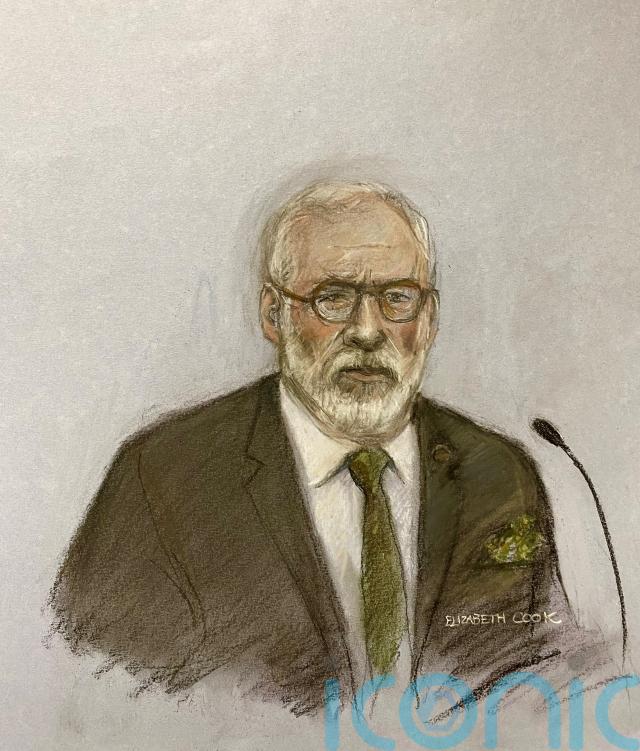
Gerry Adams has said he came to the High Court in London “to reject the allegations” of him being behind three IRA bombings in England and “to assert the legitimacy of the republican cause”.
He commented after giving evidence in the legal action he is defending against three men who were injured in the bombings.
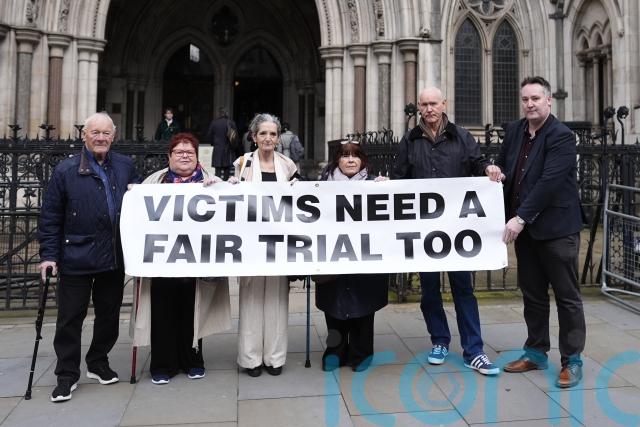
John Clark, a victim of the 1973 Old Bailey bombing in London; Jonathan Ganesh, a 1996 London Docklands bombing victim; and Barry Laycock, a victim of the 1996 Arndale shopping centre bombing in Manchester, all allege that Mr Adams was a leading member of the Provisional IRA on those dates, including of its Army Council, and are seeking £1 in damages.
The former Sinn Fein president told the court earlier this week that he had “no involvement whatsoever” in the bombings and was never a member of the Provisional IRA.
Speaking towards the end of the trial, out of court, he said: “I’m restricted about what I can say about these proceedings so I will limit myself to reminding you that Irish people have long had a bad experience of British courts, Irish republicans especially.
“However, I came to London to reject the allegations levelled against me.
“And to assert the legitimacy of the republican cause and the right of the people of Ireland to be free.
“I am also here out of respect for the claimants. I am very mindful of the many other victims of the conflict.
“They too deserve our respect. Thankfully the war has been ended.
“As an Irish republican I am glad that with others, I helped to secure this.”
Edward Craven KC, for Mr Adams, questioned on Thursday why the three men took several decades to bring their claim, saying it should be dismissed for being brought too late.
He said to the judge: “In Mr Clark’s case, we are dealing with a delay that is genuinely unprecedented in magnitude.
“We say the very brief and bald hearsay evidence you have been provided with falls a long way short of the kind of explanation that ought to be provided for a delay of this length.”
He also suggested the three men were using the claim to try to have a “public inquiry style” hearing into finding historical truths, and asked the court to focus on the three specific bombings.
The barrister said this could be an abuse of the court system, adding: “One of the concerns we have had throughout is that the claim is being used as a vehicle for a much wider examination of Mr Adams’s alleged role and actions.”
In statements to the court, the three men said the reasons they did not bring claims earlier were that they did not realise they could do so, could not afford it, were suffering from mental or physical injuries and feared violent reprisals.
Anne Studd KC, for the men, said on Thursday that it would be “unfair” if, after the trial, the case was to be thrown out over an abuse of the court system.
She said: “It is arguable and legally unobjectionable, and these claimants are entitled to pursue it.”
At the start of the trial, she said that a “jigsaw” of evidence from those who knew Mr Adams and those who knew of him would prove the case against him.
That includes intelligence officers working for the British authorities and former IRA volunteers.
One anonymous member of British Army intelligence, known as witness A, said in a statement to the court last week: “My own beliefs are that Adams would not have been able to do what he did in the political arena if he had not been a member of the Army Council, and this includes all the time up to the Canary Wharf bomb in 1996.”
A second anonymous intelligence officer, known as witness B, said last week that if Mr Adams did not hold a high rank in the IRA, then he pulled off a “remarkable coup” in convincing the British, Irish and US governments, as well as many IRA members, that he was.
In a statement, he said: “Had the defendant not been the senior figure in the IRA that he was, there would have been absolutely no point in the British, Irish and United States governments dealing with him the way they did on the road to the Good Friday Agreement in 1998.”
Ms Studd said on Thursday: “In order to establish his role in the Army Council in the 1990s, we have had to set the ground for why it is that his account is not plausible.”
The trial, before Mr Justice Swift, is expected to conclude on Friday.

Subscribe or register today to discover more from DonegalLive.ie
Buy the e-paper of the Donegal Democrat, Donegal People's Press, Donegal Post and Inish Times here for instant access to Donegal's premier news titles.
Keep up with the latest news from Donegal with our daily newsletter featuring the most important stories of the day delivered to your inbox every evening at 5pm.
Follow us on


This publication supports the work of the Press Council of Ireland and Office of the Press Ombudsman, and our staff operate within the Code of Practice of the Press Council. You can obtain a copy of the Code, or contact the Council, at www.presscouncil.ie, Lo-call 1800 208 080 or email: info@presscouncil.ie.