Search


20 Mar 2026
Search
20 Mar 2026

Please allow ads as they help fund our trusted local news content.
Kindly add us to your ad blocker whitelist.
If you want further access to Ireland's best local journalism, consider contributing and/or subscribing to our free daily Newsletter .
Support our mission and join our community now.
To continue reading this article, you can subscribe for as little as €0.50 per week which will also give you access to all of our premium content and archived articles!
Alternatively, you can pay €0.50 per article, capped at €1 per day.
Thank you for supporting Ireland's best local journalism!


Former boxing world champion Ricky Hatton was looking forward to the future and it was not clear he intended to take his own life, the inquest into his death heard.
The 46-year-old was described as a doting father, in good spirits and despite past troubles with alcohol and drugs, had been the best “in years”, his family told Stockport Coroner’s Court heard.
Hatton took his daughters and granddaughter out to a pub for a meal on the evening of Friday September 12 last year, the court heard.
He appeared normal and after dropping them off told them he would see them in a couple of days after a trip to Dubai where he was due to take part in an exhibition boxing match, the court heard.
But he failed to attend an engagement on Saturday and at 6.30am on the Sunday morning, his manager Paul Speak arrived at his home in Hyde, Greater Manchester, to take him take him to the airport to catch the flight to Dubai.
Hatton was found unresponsive in the upstairs games room at his house. The inquest concluded the official cause of death was hanging.
Tests showed the former Dancing On Ice contestant was “well over” the drink-drive limit at the time of his death. Traces of previous use of cocaine and cannabis were also found.
And post-mortem evidence showed some damage to his brain identified as chronic traumatic encephalopathy (CTE) associated with boxing.
Alison Mutch, senior coroner for South Manchester, told the court, attended by the boxer’s father, son and ex-partner and mother of his daughters, that no notes had been found from Hatton and there was no information uncovered by police to suggest he was planning to take his own life.
Concluding the inquest, she said: “He had made significant future plans and no notes were found indicating he intended to take his own life.
“I have listened very carefully to all the evidence. When I add everything together, I cannot be satisfied he intended to take his own life.

“Therefore, it is not possible in law for me to conclude suicide. I have concluded a narrative verdict.
“His intention remains unclear as he was under the influence of alcohol and the neuropathological post-mortem found evidence of chronic traumatic encephalopathy and that’s the conclusion I draw.”
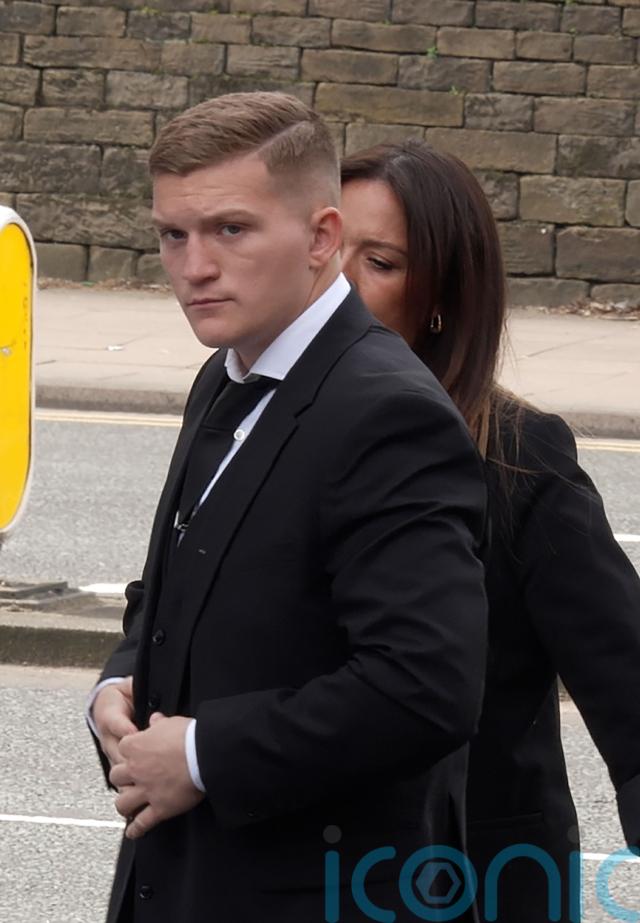
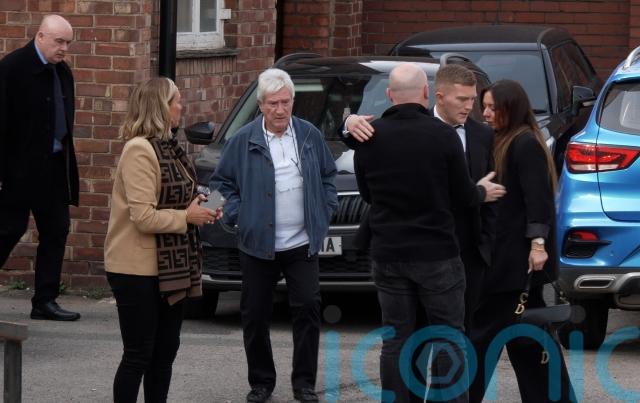
Hatton’s son Campbell broke down in tears at the conclusion of the inquest and was hugged by his grandfather, Ray Hatton, 75.
Earlier Campbell Hatton described his father in a statement to the hearing as a “laid back” man but when it came to sport was always “hugely determined.”
He added: “He lived life – in and out of the ring – at 110% and always said he never regretted it. He was always generous with people. He was always extremely well loved and cherished by all of us.”
Campbell Hatton said his father had been open in the past about his struggles with alcohol and drugs.
But he added: “We felt he was in the best place he had been in recent years.
“The family believe he was the best he had been in years and made massive plans for the future which leads us to believe this was not premeditated.
“However, over the last two or three years we all noticed a significant decline in his short-term memory.
“He repeated himself constantly, had to write things down and had to be reminded about things he had to do day to day.
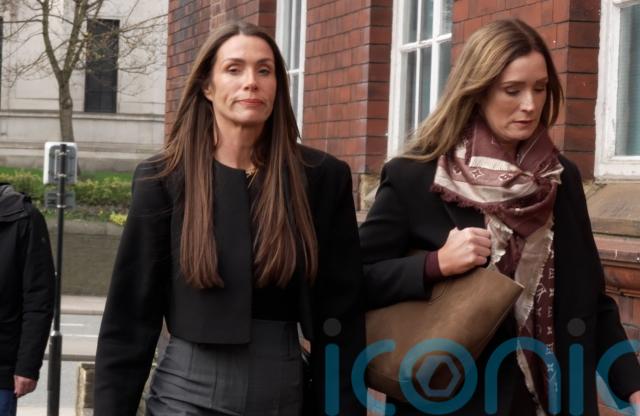
Jennifer Dooley, mother of his daughters, Millie, 13, Fearne, 12, and who was Hatton’s partner for 11 years until 2016, said he was a very hands-on father who doted on his children, and they all continued to spend time together after the split.
“He often said that the time he spent with his daughter was when he was happiest,” she said.
Hatton took his daughters and granddaughter, Lyla, for dinner at a local pub on the Friday night before his death.
When he said goodbye, he told them he would see them in a couple of days on his return from Dubai, the inquest heard.
Detective Sergeant Helen Grigalis, from Greater Manchester Police, told the hearing Hatton returned home after the meal at around 7.55pm.
He sent a message to a friend at 8.05pm and his phone last unlocked at 12.02am early on Saturday September 13, with no further use after that time.
Hatton had been due to attend a boxing bout on Saturday in Bolton for a fighter he had trained.
Det Sgt Grigalis said at 5.30pm a driver had arrived at Hatton’s house to take him to the event, but got no reply. The same driver returned at 7.30pm but again got no reply and left.
Hatton’s manager Paul Speak went to the house about 6.30am on the Sunday to take the boxer to the airport for his flight to Dubai, but also got no reply at the door.
After letting himself in with his own key, Mr Speak found Hatton unresponsive in the upstairs games room.
Hatton was fully dressed. On the pool table was an empty bottle of wine and a half-full glass of wine was on the bar.
The lights were off but music was playing from a TV.
No notes were found.
Police and ambulance were called, who “confirmed life extinct”, but could not say when Hatton had died, the inquest heard.
The house was secure with no signs of a disturbance.
The officer said there was no evidence of suicidal ideation, adding Hatton not answering his door or phone was not unusual and did not cause suspicion.
Toxicologist Dr Stephanie Martin, who carried out blood and urine tests found the alcohol in his system was well over twice the drink-drive limit.
There was also evidence of previous cocaine use, but not in the hours before death, and also traces of cannabis, but the inquest heard the use of drugs was unlikely to have contributed to death.
Dr Neil Papworth, who carried out the post-mortem examination, found the cause of death to be consistent with hanging.
However, analysis of Hatton’s brain showed, ‘degenerative changes’ associated with people older than the boxer, and often associated with Alzheimer’s disease.
He said overall the changes seen were suggestive of CTE associated with repeated trauma to the brain, but at the milder end of the spectrum resulting in memory loss and cognitive impairment.
None of the damage to Hatton’s brain could be said to have contributed to his death, the pathologist said.
Ms Dooley’s statement said Hatton’s children has been deeply affected, the girls still sleeping in his T-shirts and spraying his aftershave.
She added: “They miss their dad deeply. They are heartbroken. His loss has left a significant and lasting hole in our family.”

Subscribe or register today to discover more from DonegalLive.ie
Buy the e-paper of the Donegal Democrat, Donegal People's Press, Donegal Post and Inish Times here for instant access to Donegal's premier news titles.
Keep up with the latest news from Donegal with our daily newsletter featuring the most important stories of the day delivered to your inbox every evening at 5pm.
Follow us on


This publication supports the work of the Press Council of Ireland and Office of the Press Ombudsman, and our staff operate within the Code of Practice of the Press Council. You can obtain a copy of the Code, or contact the Council, at www.presscouncil.ie, Lo-call 1800 208 080 or email: info@presscouncil.ie.