Search


18 Feb 2026
Search
18 Feb 2026

Please allow ads as they help fund our trusted local news content.
Kindly add us to your ad blocker whitelist.
If you want further access to Ireland's best local journalism, consider contributing and/or subscribing to our free daily Newsletter .
Support our mission and join our community now.
To continue reading this article, you can subscribe for as little as €0.50 per week which will also give you access to all of our premium content and archived articles!
Alternatively, you can pay €0.50 per article, capped at €1 per day.
Thank you for supporting Ireland's best local journalism!


The Government’s ‘welfare cheats’ campaign temporarily weakened belief in Ireland that social benefits help prevent poverty, according to a study.
The research by the Esri (Economic and Social Research Institute), carried out in partnership with Community Foundation Ireland, found that while 64% of the population believe that ‘social benefits help prevent poverty’, this view was temporarily weakened after the launch of the government’s ‘welfare cheats cheat us all’ campaign on welfare fraud in 2017.
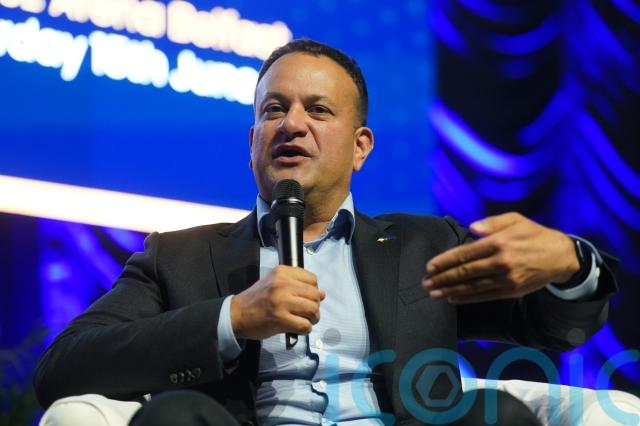
Then social protection minister Leo Varadkar launched the campaign where he encouraged people to identify “potential cheats”.
“We take fraud very seriously and have a responsibility to taxpayers to ensure that people receive what they are entitled to,” he said at the time.
Esri said there was no significant effects among people’s views for the variables related to support for redistribution and the view that social benefits make people lazy.
But there was a difference in people’s views that welfare supports “prevent poverty”.
“The model detects a statistically significant decrease on the level of agreement that social benefits prevent poverty among interviews conducted after the launch of the campaign compared to those interviewed, using different time windows around the launch date,” the report said.
“As an additional robustness check, we replicated the same analysis with a different date arbitrarily chosen as the median of the control group (25 February 2017) and no significant effects were found for any of these variables comparing the interviews conducted before and after this date.”
The study, published on Wednesday, also found that three in four people in Ireland support government action to reduce income inequality, a rate above the European average.
It found that 76% of respondents in Ireland indicated that they either ‘agree’ (45%) or ‘agree strongly’ (31%) that the Government should reduce income differences.
This percentage is higher than the European average of 71% and in other European countries such as the UK (70%) and Germany (68%).
The research found that wanting to reduce income inequality is stronger among women, young people and the working class.
Those who lost their jobs or had their income reduced during the pandemic also show higher support for reducing income inequality.
There is a higher level of support for government spending on supports for older people and childcare for working families than for supports for the unemployed.
While a high proportion of respondents in Ireland (64%) believe that social benefits prevent poverty (down slightly from 69% in 2009), there are also more negative sentiments, with 58% believing that ‘social benefits make people lazy’.
Younger people, those on the right of the left-right scale, and those with lower educational attainment are more likely to agree that social benefits make people lazy.
“While that belief declined over time, Ireland has one of the highest proportions in Europe of respondents agreeing with this statement,” the Esri study said.
There is a willingness to pay for the welfare state, and although 35% indicated that taxes in Ireland are too high, 25% think taxes should stay at the same level.
A further 34% indicated they would agree with higher taxes if it meant more or better public services, the sixth-highest percentage among 27 countries in Europe.
Dr Daniel Capistrano, researcher at Esri and co-author of the report, said: “This report shows a solid social support for enhancing the welfare state in Ireland.
“Policymakers have a favourable environment to design and implement policies that meet the demands for better distribution of income, opportunities and living conditions in Ireland.”
Denise Charlton, chief executive of Community Foundation Ireland, a partner on the research, added: “The study shows that even in times of challenge and complexities, there is a sense of fairness and support for equality within our society, something all of us should be proud of.
“These important findings will inform our future work as a philanthropic hub with an equality mission, as well as our 5,000 community, voluntary and charitable partners.”

Subscribe or register today to discover more from DonegalLive.ie
Buy the e-paper of the Donegal Democrat, Donegal People's Press, Donegal Post and Inish Times here for instant access to Donegal's premier news titles.
Keep up with the latest news from Donegal with our daily newsletter featuring the most important stories of the day delivered to your inbox every evening at 5pm.
Follow us on


This publication supports the work of the Press Council of Ireland and Office of the Press Ombudsman, and our staff operate within the Code of Practice of the Press Council. You can obtain a copy of the Code, or contact the Council, at www.presscouncil.ie, Lo-call 1800 208 080 or email: info@presscouncil.ie.