Search


21 Jan 2026
Search
21 Jan 2026

Please allow ads as they help fund our trusted local news content.
Kindly add us to your ad blocker whitelist.
If you want further access to Ireland's best local journalism, consider contributing and/or subscribing to our free daily Newsletter .
Support our mission and join our community now.
To continue reading this article, you can subscribe for as little as €0.50 per week which will also give you access to all of our premium content and archived articles!
Alternatively, you can pay €0.50 per article, capped at €1 per day.
Thank you for supporting Ireland's best local journalism!

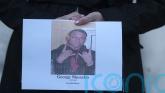
The Garda who shot and killed George Nkencho has told a court they believed they would be killed if they did not use lethal force.
Mr Nkencho, 27, died outside his home in west Dublin in December 2020 after being shot multiple times by the Garda armed support unit.
The firearms officer, Garda A, gave evidence at Dublin District Coroner’s Court on Wednesday.
They have been granted anonymity but were visible to the coroner, jury and legal teams.
The court heard how Garda A and another firearms officer, known as Garda B, arrived at the scene and found Mr Nkencho, surrounded by 10 Gardai.
En route they had heard a “panicked” call for assistance over their radio from what Garda A “took to be an unarmed guard” calling for armed response back up, adding there was a “frantic urgency to get there”.
Along with images of Garda weapons, the jury were shown photos of the 22cm knife Mr Nkencho was holding.
The Garda member described how Mr Nkencho appeared “highly alert and focused”, was instructed to “drop the knife”, and how Garda A feared he “would attack anyone who stood in front of him or try to arrest him”.
Garda A described how they followed Mr Nkencho as: “I didn’t know who else was in the area, and it’s my obligation to protect people in the area.”
They said their intention was to “challenge” Mr Nkencho and “de-escalate the situation, or deal with it as well as we could”.
Describing Mr Nkencho as a “young, fit, strong man” who was “extremely aggressive”.
Garda A said “if he were just to take off running” it would be difficult to follow as they were wearing equipment.
Adding: “If he just abscones out of the area, then it’s in my mind that I’ve failed.”
“I need to contain this situation, and I’m not doing that if I’m behind the other Gardai, or if I’m not behind him.”
They then described how Mr Nkencho was followed into the garden of a private home ignoring Gardai, Garda A was unaware it was Mr Nkencho’s home, they said.
The driveway where the confrontation with Mr Nkencho ended was not fully contained, Garda A said, as they were concerned he could have entered the house.
Later, during cross-examination Garda A said it is a “worst-case scenario” if an armed person acting aggressively enters a house as there are “barricades” and “more people” which can lead officers to lose a “tactical advantage”.
Garda A described how Mr Nkencho lunged with a knife, and after a “taser, taser, taser” warning was shouted, Mr Nkencho was tasered twice by firearms officers.
In their evidence Garda A said they then tried, unsuccessfully, to retrieve the knife while Mr Nkencho was on the ground, but he was more alert than expected and stabbed at Garda A’s legs.
In their description of events Garda A outlined how pepper spray deployed by Garda B appeared also to have little effect on Mr Nkencho who got to his feet.
“He was alert, moving quickly, he was angry-looking with gritted teeth and wild glaring eyes,” Garda A said.
Garda A described how Mr Nkencho continued to attack, “lunging” with the knife.
And decided: “it was absolutely necessary for me to use lethal force against this male attacking me from close proximity.”
Garda A explained using a Heckler & Koch MP7 firearm to shoot Mr Nkencho “at the central mass of this male’s body, as trained, not to kill him but to have the best chance of stopping him”.
The firearms officer “fully expected him to fall over injured”, but said Mr Nkencho kept coming with the knife.
They then outlined a series of “split second” decisions which followed.
Garda A shot again knowing it was “lethal force I was using against him, but believing it was proportionate to avert him” and continued to back away from Mr Nkencho.
Three more shots were fired by Garda A, until they were “backed up against a hedge in the garden”.
At that point, Garda A said Mr Nkencho was still standing with a knife in his hand.
Garda A described how the sixth shot “was different” and Mr Nkencho “fell over and was seriously injured on the ground”.
Then Garda A said they became aware of “screaming coming from the house” and “two or three adult females” came out of the front door.
At that point Garda A and his colleague started CPR on Mr Nkencho.
The jury was shown a mobile phone video clip of the shooting, filmed by a member of the public, which appeared to show Mr Nkencho being shot in the back and heard how a pathology report indicated Mr Nkencho had a gunshot entry wound in his back.
Asked by the family’s barrister, Eanna Mulloy, about this, Garda A replied that Mr Nkencho was “flailing around” and “it wasn’t a protracted thing where I was able to take a conscious shot at his back”.
Mr Mulloy also asked Garda A that, if had been aware of Mr Nkencho’s mental health issues at the time, would they have done anything differently. Garda A said: “Mr Nkencho was flailing around with the knife, it wouldn’t have changed anything.”
They said it was “just violence and aggression and anger” and said that in their experience “every call” to the Armed Support Unit involves people with “some sort of a mental illness or there’s some sort of a breakdown”.
“Mental health is a recurring theme” in Garda training, Garda A said, continuing that it is “foremost on my mind when I’m dealing with an incident”.
Firearms officers are called to situations involving people with mental health issues on a “weekly basis”, Garda A said.
Garda A was also quizzed about whether they had maintained “sufficient situational awareness” and if they were aware of females at the door of the house “calling out” about their brother with mental health issues.
Garda A responded: “No, I don’t recall that.”
The court also heard how one of the bullets shattered a pane of glass beside the front door.
Asked by Mr Mulloy if other options were considered including putting a barrier between Mr Nkencho and firearms officers, Garda A said: “There was no barrier, I considered every option, but it doesn’t take away from the fact that there’s absolutely no option.”
Questioned if inquiries were made of local Gardai to help inform the situation including if they knew about the house or Mr Nkencho, Garda A said: “No, we didn’t do that, the time didn’t allow it, it was just instantaneous.”
Under cross examination by Ronan Kennedy, the barrister for An Garda Siochana, Garda A explained there is a “misconception” small knives are “less harmful” and said “that doesn’t bear out in reality”.
And a large knife can be “easier to deal with”, particularly at close quarters, but small knives can be more mobile and stab vests still leave “a lot of parts of you exposed”.
Garda A also described how it is “international best practice” for armed officers to aim for the body, rather than to try and immobilise targets by shooting arms or legs.
They added it was “unfortunate” but gave the “best opportunity” to stop a “threat”.
Garda A also confirmed to the court they had started training to join the Armed Support Unit in 2016, but the day of the incident was the first time they had discharged their weapon in an operational manner.
At the end of their evidence Garda A extended their condolences to Mr Nkencho’s family.
The incident was the subject of an independent criminal investigation by the then Garda Siochana Ombudsman Commission (GSOC), now Fiosru, which concluded in June 2023 with the submission of an investigative file to the director of public prosecutions.
A decision was made not to pursue any criminal prosecution in relation to the shooting.
An inquest into his death began last week at Dublin District Coroner’s Court.

Subscribe or register today to discover more from DonegalLive.ie
Buy the e-paper of the Donegal Democrat, Donegal People's Press, Donegal Post and Inish Times here for instant access to Donegal's premier news titles.
Keep up with the latest news from Donegal with our daily newsletter featuring the most important stories of the day delivered to your inbox every evening at 5pm.
Follow us on


This publication supports the work of the Press Council of Ireland and Office of the Press Ombudsman, and our staff operate within the Code of Practice of the Press Council. You can obtain a copy of the Code, or contact the Council, at www.presscouncil.ie, Lo-call 1800 208 080 or email: info@presscouncil.ie.