Search


22 Apr 2026
Search
22 Apr 2026

Please allow ads as they help fund our trusted local news content.
Kindly add us to your ad blocker whitelist.
If you want further access to Ireland's best local journalism, consider contributing and/or subscribing to our free daily Newsletter .
Support our mission and join our community now.
To continue reading this article, you can subscribe for as little as €0.50 per week which will also give you access to all of our premium content and archived articles!
Alternatively, you can pay €0.50 per article, capped at €1 per day.
Thank you for supporting Ireland's best local journalism!

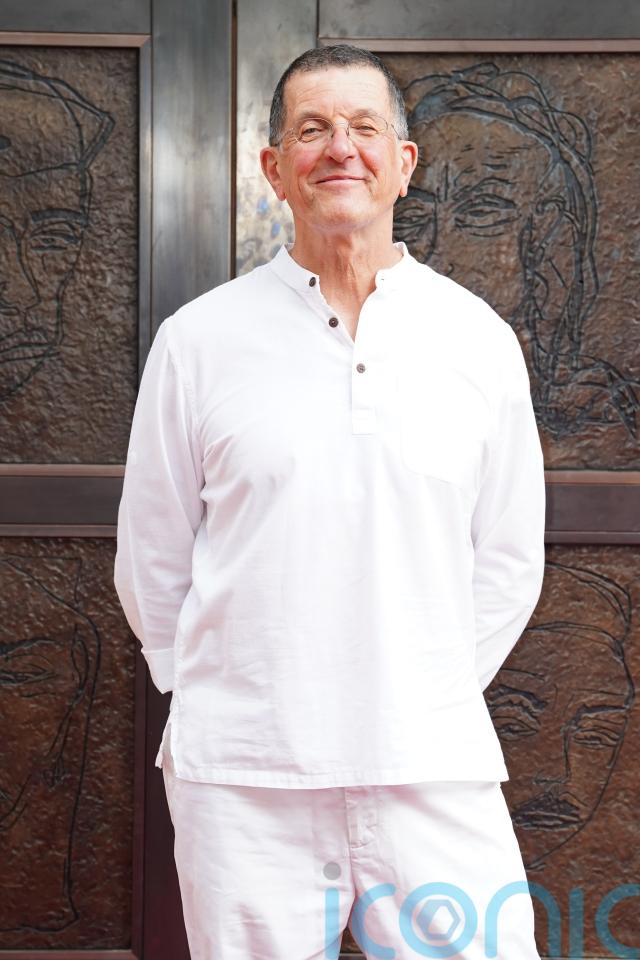
Sculptor Sir Antony Gormley has described art as being a “fundamental tool in our survival”.
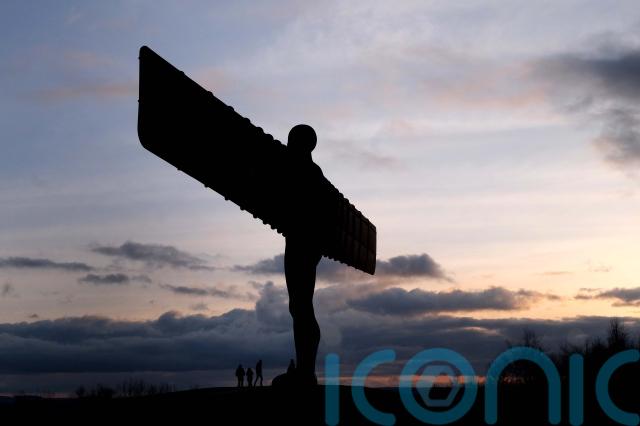
The Turner Prize winner is best known for creating the 20-metre-tall steel sculpture named Angel Of The North in Gateshead, Tyne and Wear.
Throughout his career, he has also campaigned to keep the arts in the school curriculum, saying it is a “tragedy” that education prioritises skills purely for “gainful employment”.
Speaking on the Roundhouse podcast Making Space, Sir Antony said: “Our education has been formulated by teaching to test.
“For me, (it’s a) total diminishment of what it means to be human, if we only value things that can be measured. And the tragedy of the myopia of education that is only seen as providing the tools for gainful employment.
“Education has failed if it doesn’t link us with the thing that makes us feel alive, that makes us feel happy, that makes us feel purposeful and fulfilled.
“I think the fact is that art has been a fundamental tool in our survival, in our knowing, in a way ourselves and the world.”
He described how, despite working to ensure that art remained in the curriculum, it was something he believed “can’t really be taught” but required an environment with the space, time and materials to be provided for.
“Opening the gates of creative making can be provided, and then all that is necessary is the attention and the encouragement” he said.
“I wouldn’t be sitting here today if I hadn’t had wonderful art teachers at school.”
It has been more than 28 years since his Angel Of The North sculpture, which was made from ship plate, was installed.
Sir Antony said he could not have created the sculpture with 54-metre-wide wings without thinking of the industrial history and legacy of the North East, that made the region the “workshop of the world”.
He said: “I think it was very much about recognising that a site, a place for a work, is not a geographical location findable on a map, (it is) the history and living truth of the population that lives there, which is not just human, but also all of the birds and the animals.
“The reason that it works is that it is literally, but also kind of imaginatively, rooted in that place, which is a mixture of where it is on the lower Team Colliery just over the hill from Tyne, but then also where it is in history in terms of human experience.”
The full Making Space podcast episode can be listened to from April 22.

Subscribe or register today to discover more from DonegalLive.ie
Buy the e-paper of the Donegal Democrat, Donegal People's Press, Donegal Post and Inish Times here for instant access to Donegal's premier news titles.
Keep up with the latest news from Donegal with our daily newsletter featuring the most important stories of the day delivered to your inbox every evening at 5pm.
Follow us on


This publication supports the work of the Press Council of Ireland and Office of the Press Ombudsman, and our staff operate within the Code of Practice of the Press Council. You can obtain a copy of the Code, or contact the Council, at www.presscouncil.ie, Lo-call 1800 208 080 or email: info@presscouncil.ie.