
Wait goes on for first non-white winner of best actress Bafta


Mikey Madison’s Bafta success means the wait goes on for the first ever non-white winner of the award for best actress.
Two of the six nominees in the category this year were from an ethnic minority background: Cynthia Erivo, for the musical fantasy Wicked, and Marianne Jean-Baptiste, for the drama Hard Truths.
Both lost out to Mikey Madison, who won for her role in the comedy drama Anora.
The Bafta for best actress has now been given to a white performer 57 years in a row, since the category was first introduced in 1969.
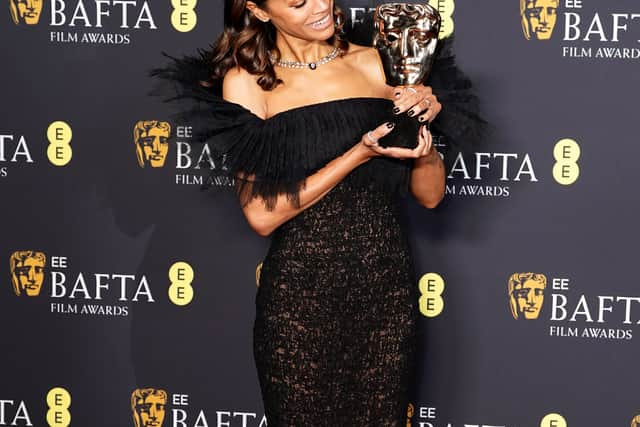
The most diverse roll call is in the category for best supporting actress, which has seen nine non-white winners since 1969, including Da’Vine Joy Randolph last year for The Holdovers, and Zoe Saldana this year for the musical crime film Emilia Perez.
Across the four acting categories, non-white performers made up just five of the 24 nominees, or 21%, down from 25% last year and 38% in 2023, and well below the record 67% in 2021.
But although the proportion of non-white nominees fell this year, it was still higher than the average since 2000 (13%) and an improvement on the 2020 list, when every acting nominee was white.
Elsewhere at Sunday night’s awards, Coralie Fargeat missed out on the chance to become only the fourth ever female winner of the Bafta for best director.
She was the sole woman on the list of nominees, for her body horror film The Substance, but lost to Brady Corbet for his epic period drama The Brutalist.
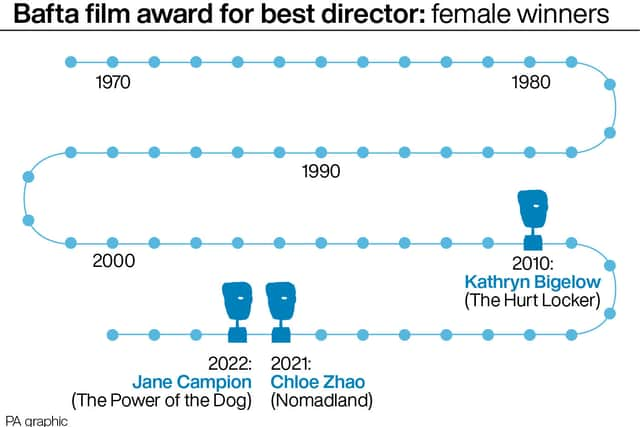
Female directors overlooked this year included Alice Rohrwacher, for the period drama La Chimera; Ellen Kuras, for the biographical epic Lee; and Nora Fingscheidt, for the low-key drama The Outrun.
No women were nominated this year for best cinematography, as was the case in 2024.
In the preceding two years there was only one female on the list of nominees, Mandy Walker in 2023 (Elvis) and Ari Wenger in 2022 (The Power Of The Dog), neither of whom won, meaning this award has only ever been given to a man.