
Fighting From Home sculpture honours vital Second World War workers
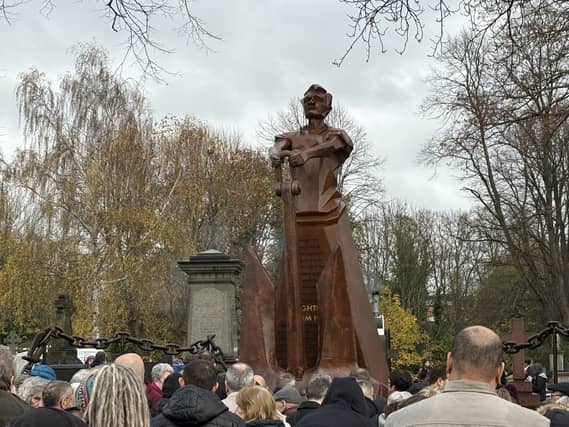

A monument to those who served on the home front during the Second World War has been unveiled on Remembrance Sunday to honour chainmakers and other industrial workers who supplied the armed services.
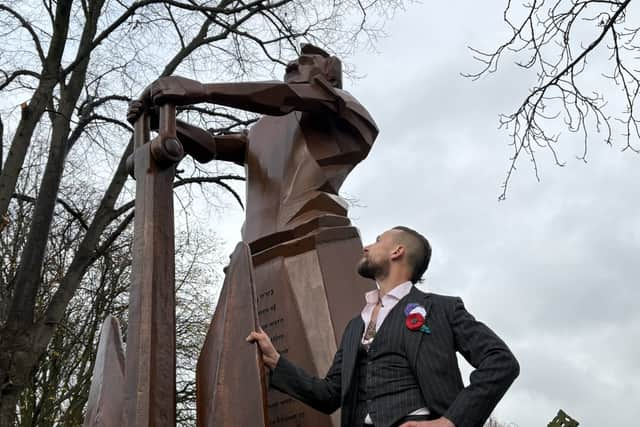
The Fighting From Home statue, featuring an Admiralty Class anchor, is the work of West Midlands-based sculptor Luke Perry and has been sited in a churchyard in Cradley Heath, the UK’s former capital of chainmaking.
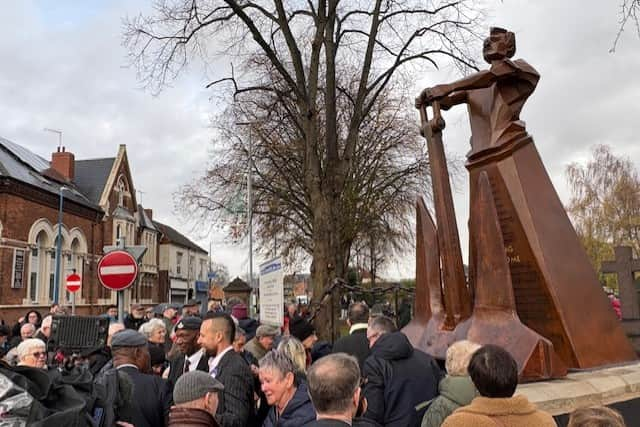
A crowd of more than 200 people gathered for Sunday’s unveiling ceremony in the Black Country town, including many relatives of workers who worked in reserved occupations locally.
The 12ft sculpture is a tribute to the approximately five million workers covered by the UK’s schedule of reserved occupations during the war from 1939 to 1945, which prevented labour shortages in sectors essential to the war effort and daily life.
Sandwell Council has provided advice and support throughout the project, including a clean-up of St Luke’s churchyard ahead of the unveiling ceremony.
In a statement issued ahead of the unveiling, Mr Perry said: “This is something I have wanted to build for 10 years as my grandad and many of his friends had been in reserved occupations during the Second World War.
“These were men who couldn’t sign up for military service as their trade was so important to the war effort.
The statue overlooks Corngreaves Road and Cradley Heath’s High Street from the grounds of St Luke’s church, which was demolished in 2016.
The features on the steel figure are based on Mr Perry’s grandfather.
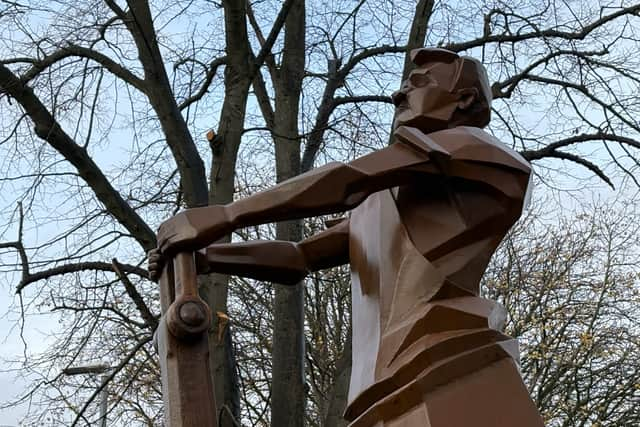
Speaking at the unveiling, Mr Perry said of workers who served on the home front: “I grew up alongside a lot of these men – whose names are on this piece – in Cradley Heath.
“And slowly I watched them all die out, and along with that I watched their stories die out.
“They would have lived their whole lives going to Remembrance services like those today and never seeing their own role commemorated.
“Their stories have been forgotten. So this monument is to make sure that they are not forgotten, to make sure that the role of the worker is not forgotten.
“That’s why we made this sculpture to remember these amazing people – how important the worker was, and still is – and remember the people who were vital to the war effort.”