
Everything you need to know about blood clots – following Mrs Hinch’s treatment weeks after giving birth


Popular cleaning influencer Sophie Hinchliffe, better known as Mrs Hinch, shared a video of herself in the hospital after undergoing an operation to remove a blood clot, just weeks after giving birth to her son, Vinnie.
In an Instagram story, the mum-of-three explained that she was sharing the update about her health after encountering some of her followers in A&E.
Speaking from a hospital bed, the 35-year-old said: “To cut a long story short guys, I had a blood clot in my groin, pelvis, leg area. I haven’t had one since 2018 and then another one decides to hit me three weeks postpartum. What a 12 months it has been.
“I am keeping positive, the operation went well. They managed to go in through my leg…they hoovered up the blood clot. They literally hoovered me which is ironic isn’t it.
“I just wanted to say I am all right and am all good and can hopefully go home tomorrow.”
We consulted some experts to gain a better understanding about the different types of blood clots and what causes them.
What are the different types of blot clots?
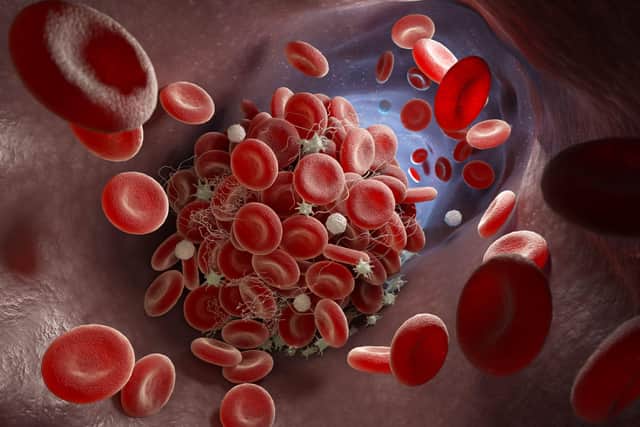
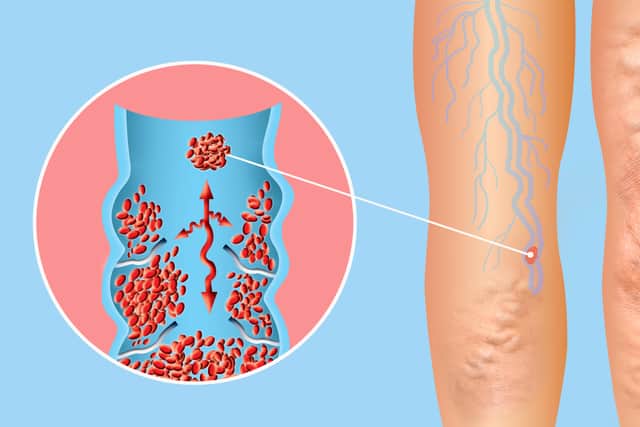
And this can sometimes lead to pulmonary embolism (PE), which can be life-threatening.
“The problem with the blood clot in the veins of the leg is that if it can break off part of it, or all of it, and travel through the body, it can block the blood supply to the lungs,” explains Professor Beverley Hunt OBE, thrombosis and haemostasis consultant and co-chair of Thrombosis UK.
“If it’s a big one, then the patient will die because you’re blocking off all the blood supply to the lungs. If it’s a little one, it would cause some pain, especially on breathing in, causing you to feel breathless and unwell and a bit sweaty.
“And then the last presentation is, if it’s a reasonable size one, the patient can be suddenly short of oxygen, and can collapse and pass out.”

“The main symptom is an unexplained pain in the muscles and the legs,” highlights Hunt. “Also, some swelling and, if it’s a really bad clot, you’ll actually get almost a blue leg.
“And then if you’ve got unexplained chest symptoms, so you suddenly become breathless and unwell, especially if you’ve got chest pain, you should go to the emergency department and seek urgent medical help.”

The NHS website states that your risk of developing DVT is higher if you are currently in or recently discharged from the hospital (particularly if you’re unable to move around much, such as after surgery), pregnant, or have had a baby in the last six weeks. Other factors include being dehydrated, bedridden, or have been travelling for extended periods (over three hours) by plane, car, or train.

“The main thing is that, because of all the hormonal changes, the blood becomes a bit more sticky,” notes Guttmann. “Also, when women have C-sections, this is surgery, so can lead to decreased mobility and increased propensity of the blood through clots.”
How DVT is diagnosed?
The NHS website states that if a doctor suspects you have DVT, you should be referred to the hospital within 24 hours for an ultrasound scan. The scan helps determine if blood is flowing normally through the vein.
You may also have an X-ray of the vein (venogram). For this, you’ll be injected with a dye to show where the blood clot is.
Can blood clots be treated?
The main treatment is blood thinners.
“Blood thinners stop the clot from any getting bigger and allow the body to naturally heal,” says Hunt. “If someone’s had a really bad clot in the lungs or in the legs, we might actually use clot busters, which will break down the clot. But they have a high bleeding risk, so we would only do it if someone is really unwell.
“And occasionally we can do a procedure where we can actually remove the clot.”
What can you do to prevent them?
“Stay mobile, don’t get overweight, follow a good diet and don’t smoke,” advises Hunt. “It’s mobility more than anything else, it’s prolonged periods of immobility that are a problem.”