
A journey through time, space and nature in Utah’s Wild West

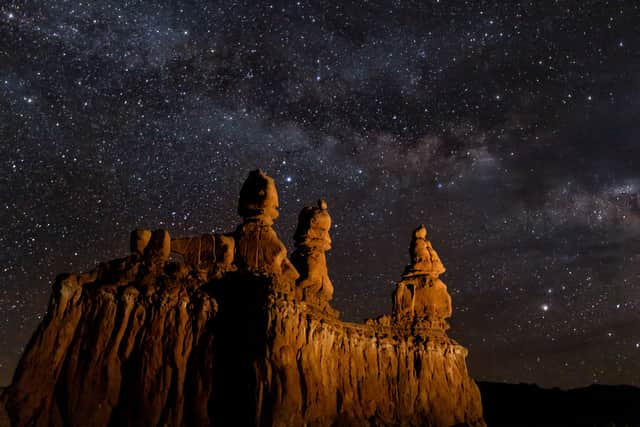
“We are literally stardust,” our tour guide Scott explains as I gaze up at a sea of stars on my first night in Utah.
“Every element that forms your body, every element that formed anything on earth was produced in the heart of a star somewhere in the universe.”
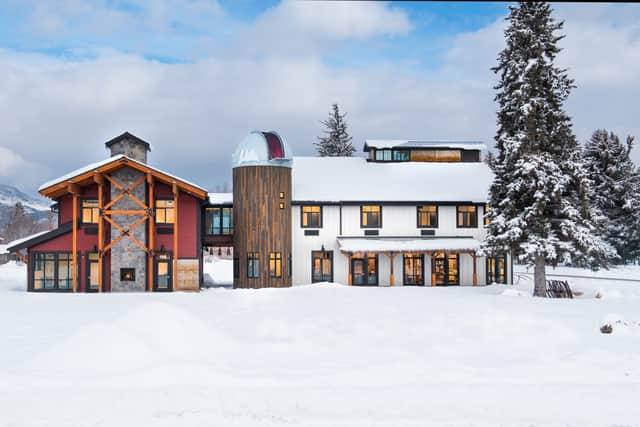
Battling the impending jet lag, I have refused the call of my cosy room at Compass Rose Lodge, around an hour outside Salt Lake City in the west of the United States, and am standing in a chilly observatory as Scott spins the domed roof and adjusts the telescope to reveal the mysteries of our cosmos.
“Astronomy really is one of the oldest things we’ve done on earth,” historian Kevin Schindler says at the inaugural Bluff Dark Sky Festival in the town’s community hall a few days later.
“From when our species was maybe a little hunched over and maybe dragging our knuckles a little bit, we looked up in the sky and we felt awe and wonder.”
That is the ethos of the festival – to encourage astronomers of all ages, backgrounds and levels of expertise to come together and enjoy the magic of the night sky.
Bluff is a small town in San Juan County with a population of around 250 and yet more than 100 people have attended the two-day event – some of whom have driven hundreds of miles to be here.
One man, who has transported his telescope worth thousands of dollars to share it with festival-goers, tells me his fascination began as a young boy on camping trips with his best friend, and that he still feels a sense of childhood amazement whenever he gazes up into the night sky.
I look up at the bright stars embroidered against the blackness and the milky way arching across the heavens. The scent of hot chocolate wafts among the crowd as I breathe in the crisp air.
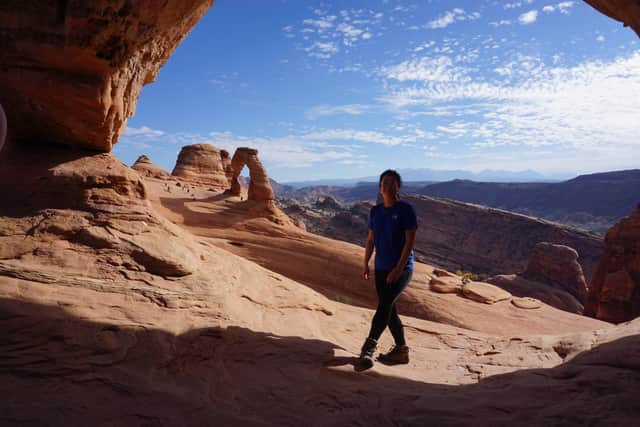
In the daylight, the grandeur of Utah’s wilderness is revealed as I zig-zag across the state on a six-day road trip.
The scenery that flashes past the car window is instantly recognisable, having formed the backdrop of sci-fi classics such as Planet Of The Apes and westerns including Butch Cassidy And The Sundance Kid.
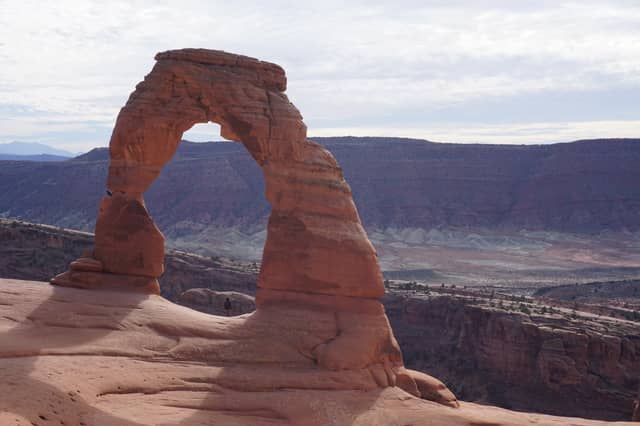
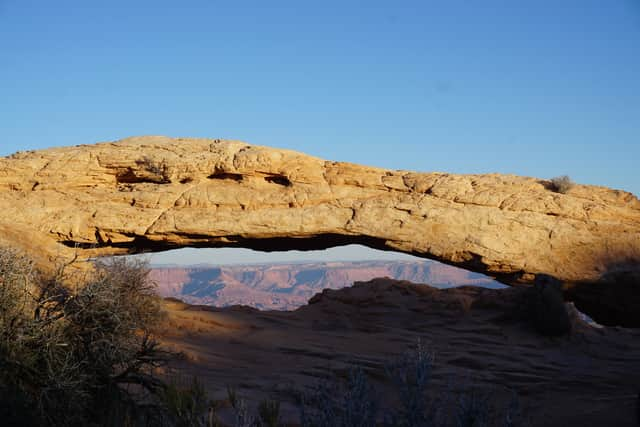
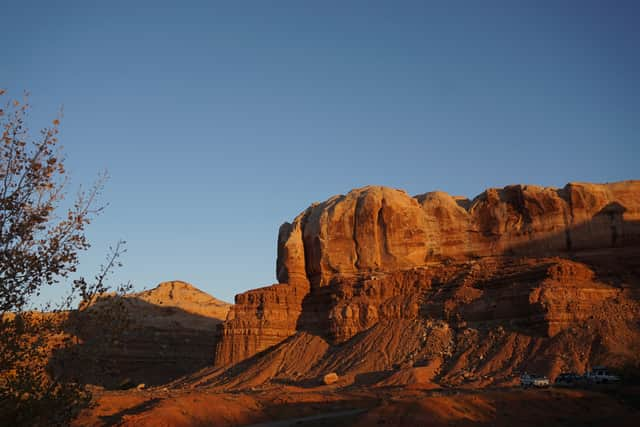
Giant red sandstone rocks tower over the flat desert dotted with tufted plants, their strata and crevices sculpted by the wind over millions of years.
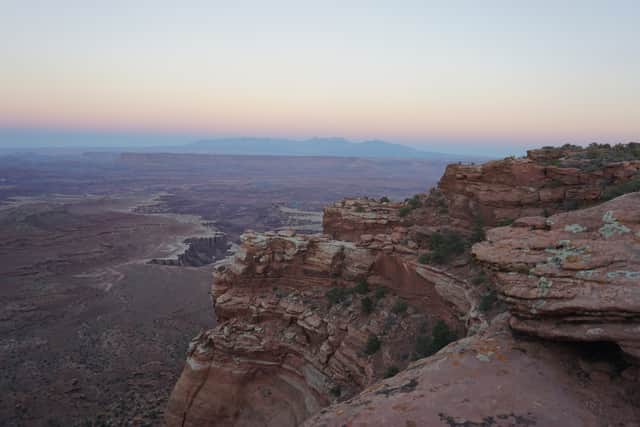
Coming from built-up London, I realise it’s impossible to comprehend the true scale of the landscape as I pause at viewpoints to look down into the labyrinth of ravines, over the expansive desert and across to the mountains lining the horizon.
It feels as if I am staring at the entire world and travelling back in time to when the Tyrannosaurus rex roamed here.
Home to five national parks and steeped in geological history, Utah is an adventurer’s dream – with a chance to stumble across the fossilised remains of a mammoth while hiking, abseil down the steep canyons and ride a horse through true cowboy country.
At first, the arid climate and rocky landscape seem a little bare and, perhaps, rather inhospitable, but spending time with indigenous people whose ancestors have lived here for thousands of years opens my eyes to the resources and opportunities presented by the desert.
“There’s different clan systems within each tribe,” he says, explaining his Dine (or Navajo) heritage, “There’s a relationship usually associated with nature, with the terrain out there, because our stories originated in these lands.
“My first clan is Deer Springs people. So I’m taught to introduce myself with that.”
Suddenly, something catches Louis’s eye.
“Did you see that?” he says excitedly as I whip around, a moment too slow, “That was a buck, a big male deer with antlers!”
Strolling through the sunlit valley, Louis pauses every so often to bend down and show me different plants and talk about their usage within indigenous cultures.
Louis tells me that before hunting season, his clan say prayers to show respect to the deer.
“So it’s mutual, it’s not possessive. We all take care of this landscape because it takes care of us,” he says, explaining the concept of ‘Hozho’ – a central philosophy for Dine people.
“It’s like your physical, your mental, your spirituality and nature. Those four elements should be interwoven at all times.
“That’s our Hozho, our balance. We are one with nature.”
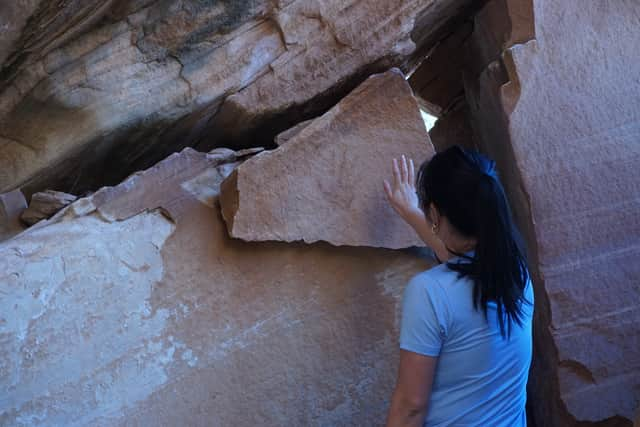
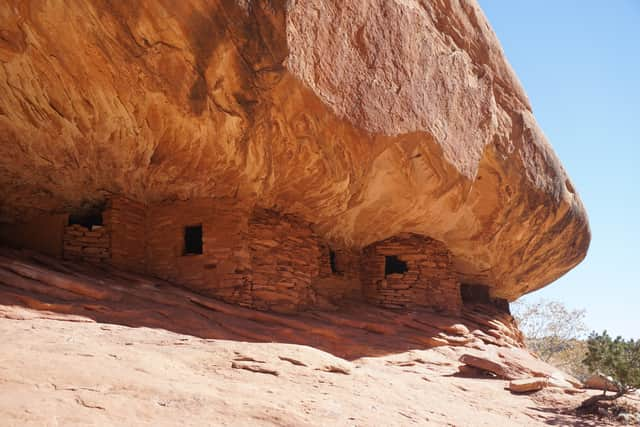
Ancient Puebloans who stored their food here between 700 and 2,500 years ago have left handprints painted into the rock, like a greeting from the prehistoric era.
Before my flight home, I stop at the Clark Planetarium in Salt Lake City to meet its director Duke Johnson, eager for one more chance to learn about the mysteries of our universe.
“If there’s one thing that unites everyone, every species, no matter what it’s the night sky,” he says, as we peruse the exhibitions, including a huge chunk of meteor and a piece of 3.3 billion-year-old moon rock.
Leaning back in the planetarium’s domed theatre, Lupita Nyong’o’s soothing narration accompanies a film on the miraculous conditions which mean life can survive on earth – our planet being perfectly placed within our solar system with just the right atmosphere.
Later, as I gaze out of the plane window onto the other-worldly scenery, I realise I am leaving Utah feeling more connected to both the nature here on earth and stars up in the heavens and am reminded of the Dine greeting Louis taught me.
“Ya at’eeh,” he’d said, gesturing towards his homeland, “That’s really important for me to say.
“I’m saying you’re a part of it, you’re a part of everything.”
How to book
Utah’s Canyonlands: 13 nights from £3,135 per person (including flights, car hire and accommodation based on two sharing), prices based on September 2026 departure (www.northamericatravelservice.co.uk, 0333 323 9099).
This fly-drive loop with North America Travel Service starts with the urban vibes of Salt Lake City, a journey through Southern Utah with stops including Moab, Bluff, Arches National Park, Monument Valley, and Canyonlands National Park. For more information on Utah, visit www.visitutah.com. Direct flights to Salt Lake City are available from London Heathrow.