
3 men on how big health scares changed their lives

If you’re a man living in the UK today, the women in your life will, on average, live four years longer than you. Four whole more years of walking the dog, paying tax, cooking spag bol, reading to the grandkids, skinny dipping, travelling, dancing in the kitchen. That’s a lot to miss out on.
According to Movember, two in five men die prematurely, and the three biggest killers are cancer, cardiovascular disease (CVD) and poor mental health – men are three times more likely to die from suicide than women. Blokes are also more likely to smoke, drink or be overweight – risk factors compounded by them being less likely to seek help early, meaning later diagnosis.
Public health policies need to maximise the impact of male health inequalities, but there’s a lot we can all do to help the men we love take care of themselves – it starts with awareness. We spoke to three men whose worlds were transformed by major health scares…
‘I WENT TO GP WITH A SORE THROAT – A BLOOD TEST REVEALED PROSTATE CANCER’
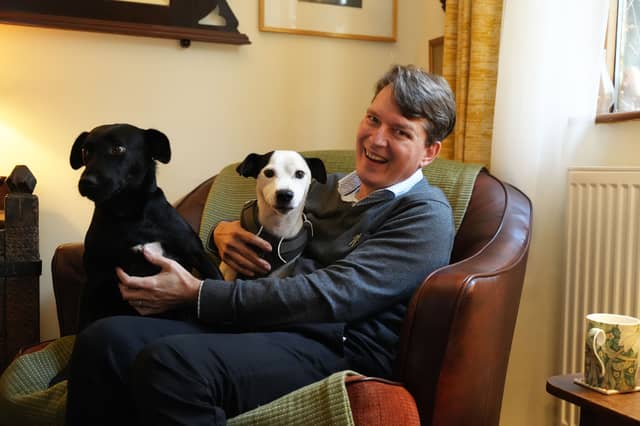
Bruno Vinel, 59, lives in Stourbridge with his husband and two rescue dogs. In 2015 he saw his GP about a scratchy throat, but a routine blood test flagged sky-high PSA levels, indicating prostate cancer.
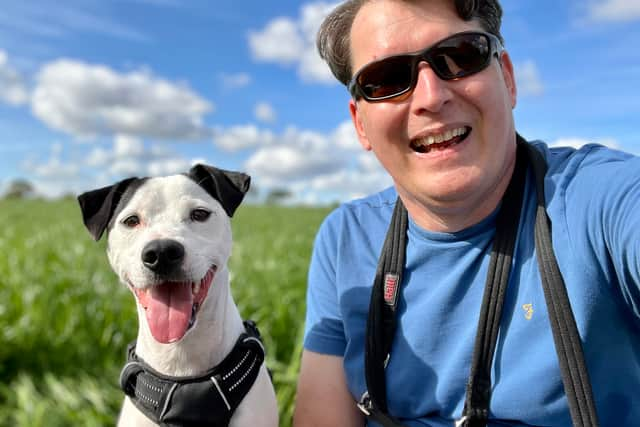
“When you’re doing pottery, you’re in the moment. You’re using your hands, your brain is focused. Those activities are very important to try to find a way to cope with the emotions. It’s a challenge as well,” he says. “I still have 20 years ahead of me. I want to think that. I asked my oncologist: ‘Am I going to die of prostate cancer?’ And she said, ‘No, because we’ve got plenty of options to treat and keep it at bay.’”
He wants PSA tests to be more readily available for people to support funding for new treatments. “I read about Sir Chris Hoy,” says Vinel. “It’s devastating he hasn’t been diagnosed in time to be able to be treated successfully.”
Prostate Cancer UK is highlighting that, although one in eight men are diagnosed, too many find out by chance, often when it has spread. Find out more: prostatecanceruk.org.
‘I NEVER WOULD’VE RUN A HALF MARATHON IF I HADN’T HAD HEART SURGERY’
Ed Rastelli-Lewis, 33, lives in Cardiff with his wife and daughter. He suffered coarctation of the aortic valve and a bicuspid aortic valve, and underwent major heart surgery.
“I had a balloon put inside my artery when I was almost three – I was struggling to catch my breath,” says Rastelli-Lewis. “My parents recall me turning blue from not getting enough oxygen.”
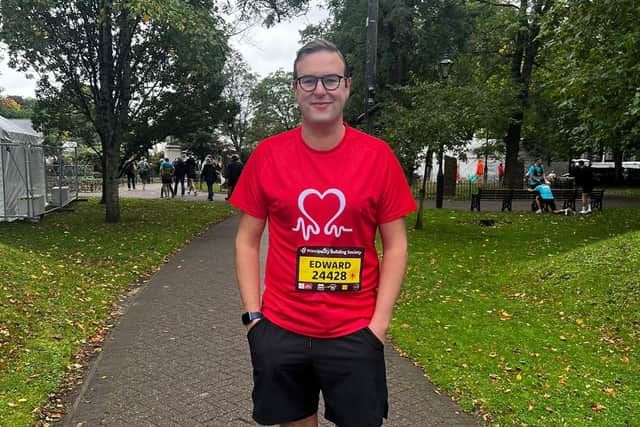
Then at 29, his consultant told him: “Your heart’s enlarged, the longer we leave it, the more likely you’ll have heart failure.” Rastelli-Lewis underwent “daunting” open heart surgery in 2021 to have a metallic valve replacement, and suffered a major complication when 800ml excess fluid was found on his heart. Luckily it was drained in time, and today, he can hear his metallic valve: “I’m like the crocodile from Peter Pan who swallowed a clock – every time my heart beats, I tick.”
Pre-surgery he wasn’t the sportiest (“I’d never even run 5km!”), but that’s all changed. In October, Rastelli-Lewis ran the Cardiff Half Marathon, raising £3k for the British Heart Foundation. “It’s something I really enjoyed and want to stick to, I feel so much healthier,” he says. Becoming a dad last year provided even more motivation: “Having a daughter changes everything for the better.”
He wants men to seek help, without shame: “People have such a stigma about getting help or having surgery. It is scary, but do not ignore it.”
‘I COULDN’T TAKE MY WIFE TO HOSPITAL MY PANIC DISORDER WAS SO BAD’
Ryan Lakhan-Bunbury, 42, lives in London with his wife. He hadn’t experienced mental health challenges until being blindsided by a panic attack while at a university party.
“All of a sudden I started feeling quite panicky. My heart started to race. My hands were sweaty,” he remembers. “I didn’t know what was wrong with me, so I didn’t know where to go for help.”
Lakhan-Bunbury left the party and ended up on a bridge. From there he developed a fear of bridges, that became a fear of open spaces, heights, motorway carriageways, long train journeys, driving. “I called myself an expert in avoidance. It made my world a lot smaller.”
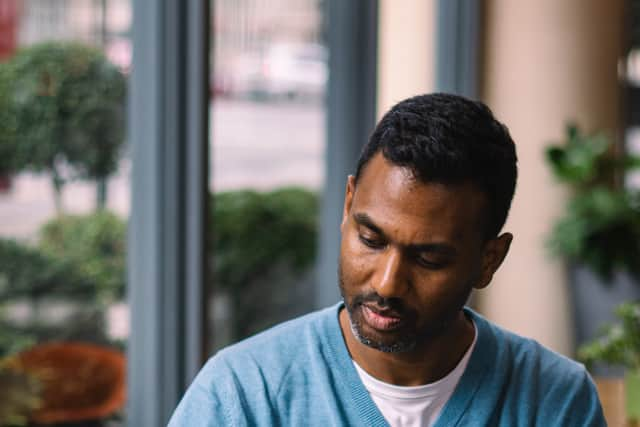
He read up on panic disorder, agoraphobia and started CBT and graded exposure – where you gradually face your fears, even braving a zip line. “I did Buddhist meditation, learned to slow down, accept and trust that things will get better. I did yoga, gave up alcohol and caffeine, and now do Lindy Hop.”
“Growing up as a man in a black, Indian, Caribbean household, talking about these things wasn’t done,” he adds. “But people like Thierry Henry and Ryan Reynolds talking about mental health has made a huge difference to me being able to be more vulnerable.”
Lakhan-Bunbury set up his own anxiety coaching business – Calm That Anxiety – and does anti-stigma work in his local community. He wants men to know: “Keeping things to yourself can take more energy than being open with it – telling people can be a massive relief.”
Visit mind.org.uk or call Mind’s Infoline on 0300 123 3393 for support.